 Cat Training
11 Tips To Make Crate Training Your Puppy Easier
DogsDog Training11 Tips To Make Crate Training Your Puppy EasierByLisa MaloneyFeb. 15, 2025 9:05 am ESTGearventure/ShutterstockIf you're worried about your puppy getting overstimulated when you have visitors, chewing things up when not directly supervised, soiling the house while you're gone, or being able to travel comfortably, crate training can be a powerful solution. Sometimes dog owners project their own feelings about being confined in a small space onto their pets, thinking that because they wouldn't want to spend time in a crate, their canine won't want to either. However, dogs have a denning instinct that humans don't, which means they appreciate having a small, cozy space to call their own.When properly introduced and applied, a crate doesn't seem like a prison to your pup. Instead, it's their home and safe space. With successful training, your puppy's crate becomes a protected enclosure for them when they need it, peace of mind for you when you're away for short periods of time, and a safe container they can travel in for relocation or an emergency. "If the dog's freaking out, they think, 'I can go hide in my crate and it's safe here and nobody's gonna bother me.' That helps them out for their lifetime," Christine Kroh, intake coordinator at Beagles to the Rescue, explained to the American Kennel Club.The path from a "chews everything" or "nervous when visitors arrive" puppy to a "calm and crate-trained" dog may not be immediately obvious — especially if you approach it while thinking like a human. The key to success is putting yourself in your puppy's shoes, figuratively speaking, and helping them forge a positive relationship with their crate. Once you've started, it's important to stay consistent, because the process may take up to six months — although some puppies catch on much more quickly.Choose the right crate for your future adult dogJus_Ol/ShutterstockIdeally, your puppy's crate should be a lifelong investment — which means it must be large enough to fit not just your pup as it is now, but its eventual adult size. If you're not sure what that is, there are a few ways of estimating how big your puppy will grow. Your options include investigating the size of your dog's parents or checking breed standards if your puppy happens to be purebred. When in doubt, chat with your vet. They can help you arrive at a reasonable prediction of how large your puppy will get. However, bigger isn't always better. The crate should be large enough for your puppy to stand up and lie down in, even when full-grown, and to turn around in comfortably. If it's too large, your still-small pup might feel like it has enough room to soil one side of the crate and sleep on the other — not the sort of habit you're looking to build. The solution is to use a divider inside of the crate, creating a temporary, smaller space that your puppy's denning instinct will encourage it to keep clean and tidy. As your dog gets bigger, you can adjust the divider, giving it increasingly more space.Your choice of crate design and material matters, too: To start, it should be sturdy enough to resist chewing. If your dog prefers feeling enclosed in a dark, quiet space, you might want to use an airline-style kennel at home, even if you're not traveling, because it feels more private. Or, you could cover a more open, wire-style dog crate with a blanket to help create a calm, quiet ambiance. However, this approach comes with some caveats. "The most important thing to remember is that a cover can cause a crate to heat up and should only be done if someone is home to supervise, since it's important to make sure the pet gets proper ventilation," Kelly Armour, a certified trainer and behavior analysis specialist advised PetMD.Train your puppy to go in the crate on its ownCarlydybka/Getty ImagesThere's a natural progression when it comes to crate training: First you have to get your puppy to go into the crate of its own accord, usually by tossing a handful of kibble innside and giving it the verbal command to enter — perhaps "crate" or "go home." Your puppy follows the kibble — who doesn't want second breakfast? — and your initial mission is accomplished in that moment.To ensure that behavior becomes repeatable on command, consistency is key. Repeat the kibble toss with the verbal command and, over time, your pup will learn to go into its crate with just the command and perhaps a "throwing" wave of your hand, no more food required.Another trick is to keep the crate open and placed somewhere that you and your family spend time anyway, so that if your pup enters it spontaneously, you'll be around to praise it. Hiding treat puzzles in the crate, or favorite toys, is another way to stimulate your puppy's natural urge to explore, which you can then reward any time it goes into the crate to investigate.Keep the crate close by and look out for potty cuessophiecat/ShutterstockIdeally, your puppy's crate should have a set place in the home that's convenient for both of you. But when you first start crate training, position it somewhere close to you. For example, if you're training your puppy to sleep in its crate at night, consider keeping it near the bed at first — even if that's not where you want it to ultimately end up.This is the best course for two reasons: First, your nearness may comfort your puppy and help it feel more comfortable sleeping in the crate. Second, keeping it close means you can listen for whining and other cues that signal it needs to go outside to defecate or urinate, which puppies under 6 months of age may need to do every three or four hours. Puppies generally need to go outside more often than grown dogs, and whining is one of their only means of letting you know about the impending consequences if it doesn't happen. Once you and your puppy have established a comfortable routine and it doesn't need to be let out in the middle of the night, you can gradually move the crate to its permanent location. How quickly you can move the crate depends on your dog; the goal is to make adjustments without disrupting the routine and level of comfort you've created.Create positive associationsChristine Bird/ShutterstockFeeding your puppy in its new crate doesn't just induce it to go in there and stay a while: It also helps create a lasting, positive impression of the space. This is key for making it actually want to go inside, and feel comfortable while it's in there.If your puppy hasn't yet started forming a positive bond with its crate, there are several things you can do to help foster those associations. They include adding blankets and dog beds to make the crate more physically comfortable, a favorite toy, and something that smells like you (as long as your dog won't chew it up). You can also adjust the location of the crate if it's near anything that's too loud, hot, cold, or unpleasantly smelly to your dog's nose.Above all, don't use time in the crate as a punishment. It's better to think of it as a proactive behavior-management tool than as a temporary holding cell for puppy miscreants. Instead of waiting for your pup to jump all over visitors and then putting it in the crate as a punishment, place it in the crate before your visitors arrive. The inclusion of an interactive treat or toy can keep it entertained and continue building that positive association with the crate as its safe, happy place.Start with supervised stays in the crate and work up to short periods alonesophiecat/ShutterstockStarting with small, manageable stays in the crate will help build a pattern of success. Instead of just tossing a handful of kibble inside, go ahead and feed your puppy a full meal within. Close the door while it eats, then open it again after it's finished. Once that feels comfortable and easy, your next step is to keep the door closed for a minute after your pup is done eating — then gradually increase that time. The key is progression. Keeping your puppy's initial crate stays short, then increasing them in small increments, helps you build success upon success, fostering mutual confidence, comfort, and trust.It may be tempting to think that once your puppy can stay inside the crate for a while with you nearby, you can just walk away and leave it there. The truth is, for some dogs that'll work fine — but for others it'll be too much, too fast, and might even set back your training. You should tackle alone time in the crate gradually, too.After you close the door on the crate, spend a couple minutes sitting quietly nearby before you leave the room for another minute or two. When you come back, spend another couple of minutes sitting quietly by the crate before you open it. This helps keep your dog calm as you come and go by ensuring the crate door opening and closing isn't directly tied to your arrivals and departures. Once you see that your puppy is comfortable being alone inside the crate for short periods of time, you can gradually increase those periods and work up to leaving the house entirely.Ignore your puppy when necessaryAmber Aquart/ShutterstockTo get your puppy to stop barking, whining, or otherwise vocalizing when in the crate, you'll need to discern why it's doing so. Does it need to go outside, it feeling bored, or is there another reason entirely? Unless it is in physical discomfort or requires a bathroom break, the best solution is often to leave your pup where it is until it quiets down. As soon as it's calm and silent, that is your opportunity to let it out of the crate. Otherwise, you risk teaching it that vocalizations are what causes you to open the door.It may feel harsh or cruel to leave a "crying" puppy in its crate. After all, you're its entire world, and you want it to be happy. But a little effort and perseverance now will pay off in spades later, as the habits you form in the present will persist for the rest of your dog's life. If it learns that whining or barking will get it out of the crate, it'll be much harder to change that perception in the future.Use a camera to keep tabs on your puppy while out of the houseClaudia Luna Mtz/ShutterstockOnce your puppy can stay in it crate for up to half an hour when you're in the other room, it's time to leave the house. It's important to retain your habit of sitting quietly next to the crate for a few minutes before leaving, and sitting quietly by the crate for a few minutes after returning, so the puppy doesn't link the door opening and closing directly to your arrivals and departures. But you should also vary when you put your dog into the crate during your departure routine to avoid creating other inadvertent "I'm going to leave you alone now" cues that might nudge your young dog into separation anxiety.If you're feeling anxious yourself about leaving your puppy alone in its crate, or just want to monitor its behavior in your absence, a nanny cam or video baby monitor are both great solutions to let you observe it remotely. If you're really motivated, you can even use the nanny cam to time your arrival for a moment when your pup is quiet and calm — the optimal time to let it out of its crate.Create a calm environmentJus_Ol/ShutterstockThis tip applies to both you and your puppy: In a perfect world you should be as calm and relaxed as possible while putting a puppy in its crate, whether you're doing that with a verbal command or physically. At the same time, try to avoid putting it in the crate when it's in "go" mode; aim for a moment when it's calm instead, or tire it out with a play session and then send it to the crate once it's more relaxed. All of this helps set the tone of your puppy's crate being its safe haven, which helps encourage it to go in and out of it naturally and be content when it stays in there for some time. Speaking of time, it's important to note that your puppy shouldn't ever stay in the crate all day and night. Although the crate is its safe space, it's not its only place, and it still needs plenty of time and space to explore, play, and interact with the rest of the family. Keep your expectations realisticSearsie/Getty ImagesWe all want instant results and success, and some puppies do catch on very quickly. But realistically speaking, no crate training will be complete overnight, and for some dogs it can take up to six months of consistent effort on your part. If you're being consistent and still not seeing the results you want, it might be time to consult a professional trainer — but before you do that, consider any other humans in your household.If, for example, somebody else is letting your puppy out of the crate every time it whines, that can really undermine your progress and prolong, or even thwart, the entire training effort. If you're able to get all the humans on the same page, though, you may be amazed by how quickly your puppy learns.Train humans to respect the crateSolstock/Getty ImagesAll the people in your household should learn to respect the crate as your puppy's place for quiet time or personal space. If you leave the crate open and available for your pup at all times, you might even notice it "putting itself away" when it needs a respite. Teach children and adults alike to not bother your puppy while it's in its crate, and it'll be more likely to keep using it as the safe haven it should be.This applies to visitors, too. They might mean well when they chase your ultra-cute puppy around for a hug, or get it so riled up that it jumps up on them in excitement, but they also won't be around to deal with the consequences when it learns that visitors at the door mean it's time for overstimulation, or when it keeps up that "cute" jumping on people after it's grown into an adult-size body. It's up to you to set boundaries with visitors that will help your puppy feel safe, ensure its crate remains a haven for it, and ultimately guarantee you a much easier life in the future with your canine best friend.Stay alert for separation anxietyReddogs/ShutterstockCrate training may help prevent separation anxiety from developing, or it help control the damage caused by an already-anxious pup in your absence. However, it's not a remedy for separation anxiety that's already in place; you may need special counterconditioning and products to ease your dog's separation anxiety.How can you tell if your puppy is experiencing separation anxiety? "If your dog is exhibiting symptoms such as howling, drooling, crate soiling, trembling, or self-injury in their crates, they may have separation anxiety and could benefit from working with a trainer who is certified in this specific behavior," Amanda Dwyer, CTC, SAPT, FFCP-T, shared with Rover. You might notice these issues happening on a nanny cam, hear about them from other family members, or even learn of them from your neighbors — or you might encounter the destruction firsthand when you come home.Some of these behaviors can be caused by health issues, so it's a good idea to see your vet and rule out medical causes. If none are apparent, there are some steps you can take to manage your dog's separation anxiety, or you might need to consult an animal behaviorist.
 Cat Training
13 Tips To Help Your Cat And Dog Become Best Friends
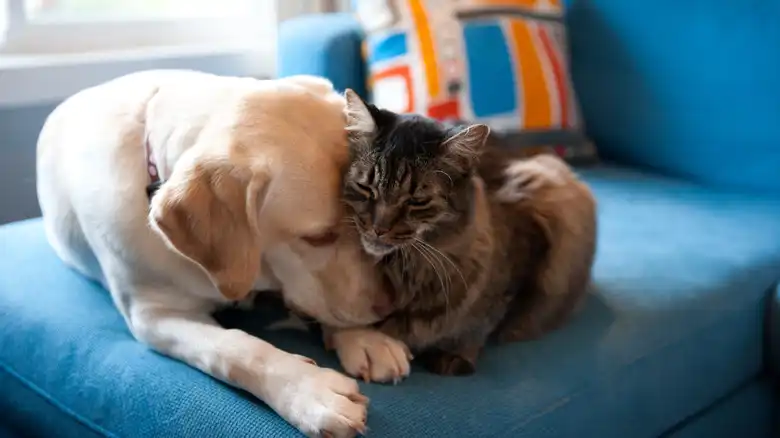
Pet ParentingPet Compatibility13 Tips To Help Your Cat And Dog Become Best FriendsByAdam SymchukDec. 28, 2024 9:05 am ESTKimberlee Reimer/Getty ImagesWe may receive a commission on purchases made from links.Cats and dogs have long been painted as mortal enemies with too many differences to get along. Yet, you can find countless videos of kitties and pups cuddling up or playing while browsing social media. A long, loving friendship between these seemingly mismatched pets is possible, but it may take a lot of work (and a little bit of luck). You should prepare for the possibility that your furry friends may never get along; after all, each canine and feline comes with their own personality and life experiences.You can help increase the odds of your cat and dog becoming best friends in many ways. This process starts before you even introduce a new pet to your home and carries through to the first meeting and continued support for building a healthy relationship. Witnessing cat and dog friendships is a remarkable thing; just prepare to invest some time into fostering a harmonious living environment.1. Get your cat and dog at a similar ageRyanjlane/Getty ImagesIn a multi-pet household, things don't consistently work out like you want. If having both a dog and a cat at all times is important, your little furry companions likely won't always enter your life at the most convenient ages. You might have a stubborn cat that does not like change or an older dog with no patience for a kitten on your hands. While the stars won't necessarily align for that perfect bond, it is best to get them at around the same age — preferably young — if you can manage it. A 2008 study completed by Tel Aviv University provided some insights into households with positive relationships between pets. The research noted that the probability of the two getting along increased when a kitten under six months of age was introduced to a puppy less than a year old.If you can handle the guaranteed chaos of raising a kitten and a puppy simultaneously, bringing them together at this early stage will increase their friendship chances. The two can even help ease each other's anxiety (and maybe get together for that much-desired sleepy-time photo op). To better accomplish this, work with your veterinarian to develop socialization plans for your kitten and puppy for both before and after adoption. According to the American Veterinary Medical Foundation (AVMF), this should take place while the dog is three to 14 weeks and the cat is three to nine weeks of age. Being introduced into a household that has a socialization plan prepared in tandem with a professional will improve a kitten or puppy's adaptability to their new home and any other pets.2. Adopt from a foster home that has multiple petsSV Production/ShutterstockAs a potential pet parent, you can pursue many different routes to bringing a new companion into your life. You can adopt an animal from a shelter, purchase from a reputable breeder, or get a rescue from a foster home. Volunteers who foster until a pet can find its forever family will often care for multiple pets at once. Such individuals will typically let you know what experience your potential pup or kitty has had with other animals while being fostered. It never hurts to ask for details, as someone's definition of "gets along with" may not match your own needs or environment. If your future companion has grown up chilling around siblings of different species, they're more likely to fare well in their new home.Taking the cat and dog adoption process step-by-step and considering your options is essential, but getting your future furry friend from a foster home has plenty of benefits. Adopting a rescue goes beyond having access to an experienced pet parent who can provide crucial information about the animal's background. Many fosters take in rescues and those most in need of a home; the reward of giving a pup or kitty a second chance at life can be a positive, life-changing experience.3. Research breed compatibility before introducing a new dog or catsophiecat/ShutterstockWhile many owners may not know what breed their cat is, the genetics of canines can play a significant role in their potential temperaments and personalities, along with different attributes like energy levels and health. These traits come from selective breeding to create the perfect working dog or companion. "While the personalities of individual dogs will vary, just as human siblings will have different personalities, a dog's behavioral tendencies will reflect their breed," Dr. Jerold Bell advised the American Kennel Club (AKC).Given this, you should avoid certain breeds if you want your cat and dog to have the best shot at getting along. Canines with a high prey drive can be prone to chasing felines; this includes sporting, herding, and terrier breeds. Exercise caution and do your research on your future pup; even crossbreeds with one agreeable trait might be canceled out by the other. There are always exceptions, and these are generalizations, so it is best to check for yourself.Thankfully, certain breeds tend to be better at interacting with other pets. Both small and big breed dogs, such as a beagle or a golden retriever, may get along with different types of furry friends more easily. You won't know if they will be compatible until they meet, but picking a breed known for working well with other animals will help those chances. If your borky boy or girl has shown a dislike of any cats, it can be difficult (though not necessarily impossible) to train them otherwise. This is another area where socialization at a young age can have a big impact.4. Create a safe environment for your cat and dog to get used to each otherCassy Jones/ShutterstockBringing a new furry friend into the house can be a stressful time for both pets and owners. It is an unfamiliar space, and the amount of activity, scents, and sounds can be a lot for a dog or cat to take in. Not exactly the ideal circumstances under which to meet a new buddy. The Animal Humane Society of Minnesota recommends keeping pets separated by a door for three to four days, giving the fresh addition their own space. This separation gives them time to get used to scents, the opportunity to adapt, and a chance for you to notice any issues before a first meeting.During this stage, you can also slowly start feeding both pets by the door so that they develop a positive association with the animal on the other side of the barrier. Additionally, you can 'scent swap' by taking a clean cloth, wiping down your cat and dog's sweat glands (under cheeks for your kitty and armpits for your pup), and letting each get familiar with the smell in their safe space. Hopefully, you will see them become more curious and less cautious about each other. Further, this separation period allows you to observe how good your dog is at obeying and listening to commands; having that control will make you feel more comfortable going into the initial full encounter between your pets.5. Be patient with that first face-to-face meetingAnita Kot/Getty ImagesToday is the day! You picked a dog breed you know is good with cats, and they haven't been fighting through the door. They're ready to become best buds ... right? While many would like to view the first meeting as the start of an instant photo-worthy animal friendship, the chances of the scenario playing out that way are low. For the initial face-to-face encounter, have them come together for a brief period in a communal area where you can supervise both pets. You will need to repeat this process multiple times; be prepared to send them back to their safe spaces to unwind before trying again the next day.Consider leashing your dog and cat (if your feline is used to wearing a harness) for the occasion. This will give you more control, especially if one or both of the animals has a lot of energy. Ideally, you will want your dog to be able to ignore the cat in favor of listening to your commands while ensuring your feline is still comfortable enough for daily activities like eating and using the litter box. It may take time and many repeats, but your efforts and patience will pay off.6. Keep their food separatePeter Cade/Getty ImagesEven after your furry friends seem to be coexisting, there are precautions you should take as they get used to each other. You are still learning about your new pet, and they are still learning about their new environment. While the two were comfortable eating with a door separating them, it is best they have their own spaces for meals.Dogs naturally guard their food and possessions; it is a survival instinct found in pretty much all animals. However, some pups may have aggression issues when it comes to protecting their meals and may not take kindly to a curious kitty trying to sniff out what they have. This may be particularly true of puppies, who are used to competing for their nutrients from their mom. Thankfully, positive reinforcement training and working with a qualified dog trainer can help with this behavior.Separation at feeding is still ideal even if your dog shows no aggression. Cats should not eat dog food, and vice versa. Both species have different nutritional requirements. A dog eating cat food regularly has a higher chance of developing obesity, while a pup's meals lack key ingredients that kitties require and can even make them ill.7. Remain on the look out for warning signsMVolodymyr/ShutterstockThroughout the process of introducing your pets and any follow-up, continue to monitor for behaviors that may lead to aggression. Even a loving canine can have moments of aggression, whether territorial, maternal, or socially motivated. Dogs often vocalize their aggression through growls or barks and physically act out by snapping or biting. Conversely, if your pup yelps while playing with your cat, you should intervene, as they may be hurt or uncomfortable.In contrast, cats are often silent players, so noises like growling, hissing, or screeching may indicate that the interaction between your pets has deteriorated and they need to be separated. Cats communicate much of what they feel through their body language; their ears, tails, and eyes all express emotions, including red flags during a bad interaction with a pooch. Much like their canine partner, aggression in kitties can happen for multiple reasons, and sometimes all they need is some personal space to unwind.8. Allow supervised playtimeGulfarazgardezi/ShutterstockCats and dogs have different ways of playing. Your kitty has natural hunting instincts that will see it stalking, pouncing, carrying its toys, and orchestrating the occasional attack on your toes under the sheet. On the other hand, pups want physical exercise, like roaming the great outdoors, going for a long walk, or a rousing game of fetch.When cats and dogs play together, you may notice some crossover; both could chase and wrestle. Yet the two won't necessarily understand each other's body language and when they're pushing the other too far. A dog tail wave is a sign of happiness; it is the opposite for a cat. They require time to figure out these signals, and until they do, you need to supervise any play and look for the signs of aggression highlighted above.There's some debate among experts regarding whether you should ever allow a cat and dog to be alone together. Marny Nofi, senior manager on the American Society for the Prevention of Cruelty to Animals (ASPCA) Behavioral Sciences Team, told Newsweek that you can leave them unsupervised once "you're completely sure that they're safe together." Meanwhile, Alexa Sessa, the head trainer and behavior expert at Peach on a Leash, advised Yahoo, "Don't ever leave cats and dogs unattended together — even those that have a great relationship." If you decide to give unsupervised interactions a try, consider testing the waters by leaving them alone in the same room and slowly moving towards brief outings.9. Make sure each pet has its own spaceSmitt/Getty ImagesProviding each pet with a cozy haven not only gives them the chance to separate from each other if they feel overwhelmed, but it is an inherent need for cats and dogs. Your feline friend needs the safety of a spot where they can feel hidden, whether to escape a stressful situation or find solace with some alone time. Additionally, they require height to survey their kingdom. Pups also need some downtime; after a long adventure, they will want to rest on their favorite dog bed or have a snooze in their crate.A stressed-out dog or cat with no room to themselves will not help foster that desired friendship. You may have to invest in new spaces for both animals when creating your multi-pet home. Even if you are living in a smaller place, there are plenty of options, such as TAKEKIT's Cat Wall Shelves, available on Amazon. For your overwhelmed pup, a PETSFIT Portable Dog Crate could be the ideal place to unwind.10. Provide both pets with their own toysSvetlana Rey/ShutterstockToy sharing may be common in a multi-pet household, as curious kitties and pups will show interest in what the other finds so much fun. Yet there is a reason there are cat and dog toys at the store, not just 'pet toys.' The needs of both differ based on how they play and interact with the world, and each requires tailored toys to keep them happy.A pups interactions with its playthings can vary drastically. One moment, it may shake the life out of a toy, only to take it to cuddle in the corner the next. Dogs can be possessive of their favorite items, which may offer an outlet for energy or be used to soothe them. Excessive toy guarding – indicated by growling, lunging, chasing others away, or biting - is a cause for concern, but some favoritism and not wanting their feline friend to touch their things is natural.Cats also benefit from having toys to play with, though they are less possessive and often jump from one to the other; a dog stealing a plaything is less likely to cause stress than the other way around. For cats, having access to multiple toys (or at least a wad of paper that you bundle up and throw) is important for keeping them stimulated. As both will inevitably play with each other's toys, it is also good to be aware of potential choking hazards, such as feathers, bells, strings, and stuffing.11. Keep their nails trimmedGarnar/ShutterstockAny owner would be concerned if their pets hurt each other; this is why you supervise play and take all of these precautions. Yet even after that bond has grown, you still have an important job to do: trimming their nails. While this process can seem daunting, it will ultimately keep your cat and dog healthier and happier.Ideally, an indoor cat's nails should be trimmed every ten days or once every two weeks, though a feline that uses a scratching post may not require such a strict schedule. Not only will this help save your furniture and skin from scratches, but overgrown nails can lead to discomfort and pain. A dog can also experience discomfort with long nails, making them irritable. Irritable pets can become aggressive. The trimming process is different for each, but you can easily clip your cat's nails and dog's nails at home with the right tools.12. A successful friendship doesn't guarantee they'll like other petsJaromir Chalabala/ShutterstockYou finally achieved a happy home, with your cat and dog playing, cuddling, and snoozing together. You should celebrate this accomplishment, but don't assume that your little furry friends will automatically be open to a new family member or welcome a visitor from another household. Every unfamiliar pet who comes into the space should go through a similar introduction process.Dogs can be protective of their caretakers and their homes, and they may see their cat friend as an extension of that. While not necessarily known as guard animals, cats can also become possessive and protective of their living space and companions. You've likely seen the videos or read the news stories with premises like "hero dog" or "cat protects," including brave pups and felines having each other's backs (though these moments make headlines because of their uncommon nature). Regardless, you should be aware that just because your kitty and pooch get along, this does not ensure they will be pleased to encounter a newcomer.13. Spend time with your cat and dog both together and apartGladskikh Tatiana/ShutterstockPlay is a vital part of both a dog and cat's lives. It is heartwarming to have them play together, learn how to meet in the middle, and bridge that puppy-kitty gap some claim is impenetrable. Both pets can also be highly tuned into your emotions; bringing a relaxed, calm happiness into the home and their lives makes for an unforgettable bonding experience between all.However, sometimes, despite your best efforts, that cherished dog and cat bonding may not happen. That is okay, too. Even if they do become best friends, you should find moments to enjoy each one on their own time, tailored to their distinct personalities. Multi-pet households have unique joys and challenges; staying calm and attentive to your pets' needs while enjoying group and one-on-one interactions is critical to supporting long-term friendships.
 Cat Training
How To Stop A Cat From Pooping On The Carpet
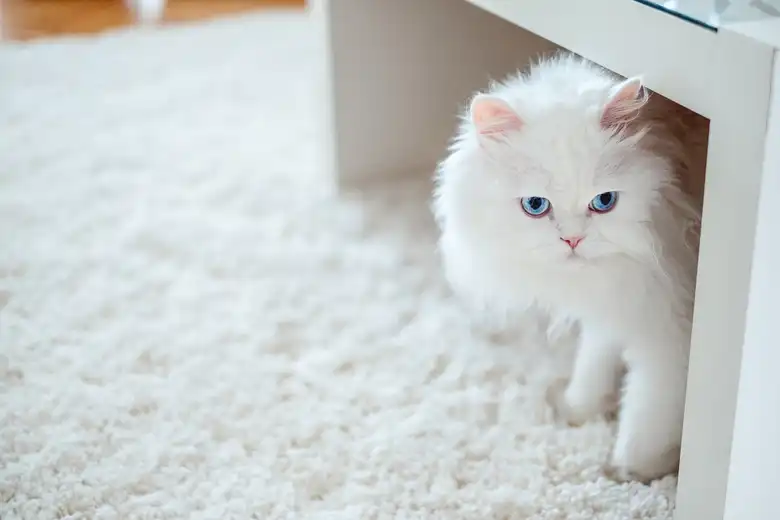
CatsCat TrainingHow To Stop A Cat From Pooping On The CarpetByBeverly BirdUpdated Oct 30, 2018Sjale/iStock/GettyImages #p5db30603a975d62d200da2054ea1b944, #p5db30603a975d62d200da2054ea1b944 img { aspect-ratio: 3648/2432; height: auto; }Your cat is adorable, and she loves you. She'll even bring you a small gift every once in a while, perhaps depositing a dead rodent at your feet. Rodents are bad enough. But some might say that poop is even worse, at least when it's not deposited in the litter box.What to do if your cat is suddenly turning her nose up at the box you've provided for her? Fortunately, you're not without recourse, but it all begins with figuring out why your feline prefers the carpet all of a sudden.Cat pooping on the floorCat pooping on the floorA handful of health concerns can have your cat pooping outside the litter box, so it only makes sense to rule them out first.If he's an older cat and has a long history of going where he's supposed to, but that suddenly changes, he might be in pain. It could be a matter of arthritis or constipation. He might begin associating the pain with the litter box if he's struggling to eliminate, and this could make your cat start pooping on the floor.Some medical conditions can make even young cats reluctant to — or unable to — get into that box. A urinary tract infection might be the culprit, although this usually convinces a cat that it's easier to both poop and pee outside the box. Inflammatory bowel disease also commonly causes a cat to stop using the litter box. It hurts to go, so he'll simply go whenever and wherever he can to get it over with.In either case, a visit to the vet can rule these things out.About that cat food…About that cat food...Even if your cat has been eating the same food for eons, this doesn't mean that it still agrees with her, especially if she's getting up in years. And if you've recently bought another brand of cat food — maybe it was on sale, or someone recommended it — the change could easily prompt different bowel habits and have your cat pooping on the carpet.Is your cat stressed?Is your cat stressed?Cats really tend to dislike change, and this is a common cause of litter box distrust.Is something about your home different lately? Keep in mind that it might be something you're not even aware of. Maybe a stray has taken to peering in your windows at night. This could easily cause your cat to change his previously tidy habits because he's feeling invaded, defensive, and just plain unhappy over the nocturnal visitor.Try to pinpoint the date when your cat suddenly decided the litter box wasn't much to his liking after all. Did your routine change about that time? Did you buy a new sofa or other items of furniture? Have you found a new friend who visits your home periodically? Yikes! These could all be cat killers! Too many cat killers can have your cat pooping on the rug.It’s about location, location, locationIt's about location, location, locationWhere exactly is this litter box that your cat prefers not to use? Have you placed it in the basement or some other remote corner of the house because you don't like looking at it? If you're finding poop deposits in common areas of the house, it might be that your cat just wants to be where her family and the action are. She might not want to travel to some distant corner to do her business.But it works both ways. Maybe you've placed the litter box in a busy area of your home, and she's going down to the basement to poop. Cats tend to like their privacy when it comes to these matters. Yes, they'll come into the bathroom and stare at you when you're going, but that's you. They don't want to be subjected to the same treatment.If his box is in the closet or some other tight, relatively hidden location, or if it's one of those with a lid over the top, he might worry that he's going to get trapped in there at a time when he's least able to fight back. It can be a good idea to give a fussy cat multiple options — litter boxes in as many rooms as you can tolerate — particularly if you have other pets who might ambush him in a weak moment.Some cats find it distasteful to poop and pee in the same place. Try placing two litter boxes side-by-side or at least in the same room so he can keep his business separate if he's urinating in the box but pooping beside it.Keep in mind, too, that cats generally do not like to sleep, eat and poop all in the same limited area. You might consider moving the litter box some distance from his food, water bowl, and bed.Scoop, then scoop some moreScoop, then scoop some moreCats are fastidious, and they can become even more so as they get older. Cat experts recommend that you scoop the litter once a day at the very least. Twice a day is better. And change it completely at least once a week, washing the box out with hot water and soap when it's empty.The problem could also be the type of litter you're using or the amount you're putting in her box. Some cats like just a little while others prefer a lot. Try changing it up to see if this brings about any results. You might also want to change the box itself. If it has high sides, purchase one with low sides or vice versa.Your problem might be one of these issues or a combination. Cats can be quirky. Sometimes all you can do is keep changing things up until your cat gives a sigh of relief and steps into the litter box; then you'll know you've finally gotten it right.ReferencesJourney Dog Training: Ask a Trainer – Why Is My Cat Pooping on the Floor?Abode for Pets: How to Get Your Cat to Stop Pooping on the Carpet!Pam Johnson-Bennett: Pooping Outside the Litter BoxI Heart Cats: 10 Reasons Why Cats Poop Outside Their Litter Box & How to Resolve the IssuePam Johnson-Bennett: Some Common Reasons Why Cats Stop Using the Litter Box
 Cat Training
How To Keep Cats From Opening Doors
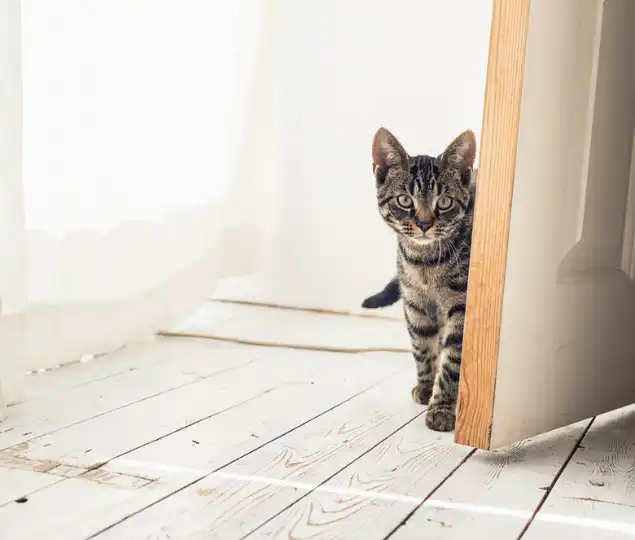
CatsCat TrainingHow To Keep Cats From Opening DoorsByLisa McQuerreyUpdated Sep 15, 2011ysbrandcosijn/iStock/GettyImages #pa1e3368960beb4116e21b48e8477d6be, #pa1e3368960beb4116e21b48e8477d6be img { aspect-ratio: 4961/4223; height: auto; }Stop your cat from opening doors by kitty-proofing your latches, making doorways unappealing and using non-harmful repellents.Cats and Door TrainingCats and Door TrainingTraining your cat away from pushing open doors can serve several useful purposes. Stopping access to the outdoors can help keep your cat safe from predators and cars; keeping your cat from bedrooms can help reduce human allergies and ensure a good night's rest; and keeping your kitty out of pantries, basements and garages can prevent injury or accidental ingestion of harmful substances.Check Your LatchesCheck Your LatchesMake it impossible for your cat to push open doors by inspecting door handles and latches. Changes in the weather can cause wooden doors to expand or contract throughout the year, sometimes to the point that latches don't catch the way they should. Older doors or faulty doorknobs can also become worn with age and the closing mechanisms can slip, making it easy for your cat to bump or push the door open. Combat these problems by replacing malfunctioning handles or by adding latch hooks to doors.Use DeterrentsUse DeterrentsSteer your cat clear of off-limit doors by placing double-sided sticky tape on the floor in front of the door, or laying down plastic floor matting with the nubby side up. Your cat won't like the feel of these surfaces and will learn to stay away. Another option is to spray doorways with a citrus cat-repelling spray. Vinegar and coffee grounds will also keep your kitty clear of doorways, but the mess and smell makes it a last-resort option.TipTest sprays and tapes in an inconspicuous area to make sure they don't stain or otherwise damage floors or doors.Squirt Guns and Penny CansSquirt Guns and Penny CansFill a can or water bottle with pennies or load a spray bottle or squirt gun with water. When you catch your cat in the act of trying to open a door, gently spray her or toss the can or bottle in her direction. The sound and feel will irritate but not hurt her. Try to stay out of sight when using these methods so your cat doesn't associate you with the ruckus.WarningNever yell at your cat or physically punish her for opening doors. It will only create mistrust and could result in additional behavior issues.
 Cat Training
Crucial Tips For Keeping Your Dog From Eating Cat Litter (And Why They Did It In The First Place)
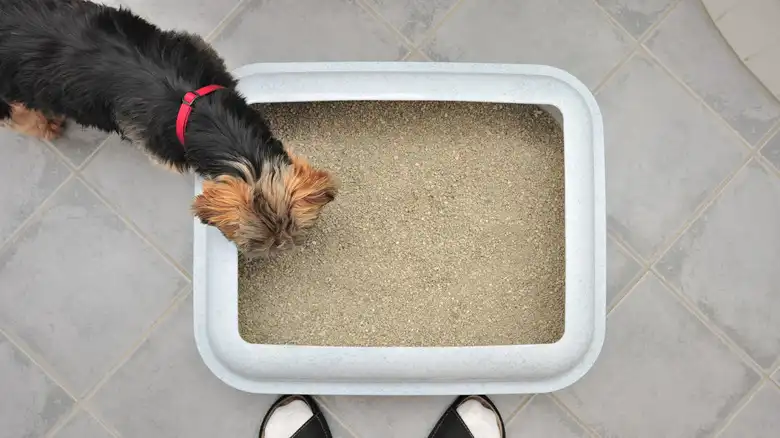
DogsDog BehaviorCrucial Tips For Keeping Your Dog From Eating Cat Litter (And Why They Did It In The First Place)ByCynthia AnayaFeb. 15, 2025 9:25 am ESTSchulzie/Getty ImagesWe may receive a commission on purchases made from links.It can be such a joy to share your home with a dog and a cat who are best friends and watch them snuggle together. If you're lucky, they might even play together. However, one of the downsides to having a canine and a feline under the same roof is that some dogs eat kitty litter, indirectly. The litter isn't the target; it's the feces buried underneath it. Referred to as coprophagia, eating feces occurs because dogs can smell food through the feces — in this case, cat food. Cat food is generally higher in protein than dog food, hence the appeal. Dogs might also be drawn to the food odor to satisfy a nutritional deficiency. Regardless of the reason, you can easily put a stop to your dog's unwanted excrement-eating behavior and say goodbye to smelly poop breath with a few crucial tips. To keep your dog from eating cat litter and poop, get a top-entry, high-walled box, raise the height of your box, or place the box in a room or area your dog can't access.Buy a high-walled, top-entry litter box, or elevate the one you already haveMike_shots/ShutterstockIf you have a small dog, you can prevent them from accessing the litter box by switching to a high-walled, top-entry box. By the way, the best top-entry litter boxes are a great solution for litter tracking as well. If your dog were to stand on their hind legs or jump on top of the box, they likely wouldn't be able to access the litter level. Even if you have a tiny-sized pup, your dog would have to jump into the box the way a cat would, but without training, it's improbable that they'll attempt this.While the top-entry-style litter box is a great option to prevent dogs from eating litter/cat poop, it might not work for all dogs. Tall dogs or very persistent, agile small or medium ones might still manage to access the litter. If this is the case, raising the height of the box should help. A few inches might be enough for a small or medium breed, but you might need to elevate it 6 inches or more for taller dogs. Just be sure to gradually acclimate your cat to this change, too, so they don't stop using the box. You can place the litter box on a crate or similar item, or use furniture risers. A healthy cat can jump 6-8 feet high, so you don't have to worry about it being too lofty for kitty.Completely block your dog's access from the litter boxAleksandr Zotov/Getty ImagesPerhaps the easiest way to keep your pup from eating out of the litter box is to make it invisible to them. Although shrinking it like Ant-Man would be a nice way to make it almost invisible — except you'd have to shrink your cat, too — placing it in a room your dog can't access is the more realistic solution. This could mean putting the box in an enclosed room or area and adding a cat door that's large enough for cat access only. An electronic pet door, like Cat Mate's Microchip-Activated Cat Flap, can also be a good option.You could also put up a dog gate that still allows cats through, such as the Carlson Extra-Wide Pet Gate with Pet Door, to prevent your dog from accessing the part of your home where the litter box is set up. With this option, you don't have to worry about putting holes in your doors or installing a cat door. Remember, your cat will be able to clear the gate, so they'll still have free reign of the house, assuming all the doors are open. No matter what option you pick, keeping your dog out of your cat's litter will keep your dog's tummy — and your household — happier.
 Cat Training
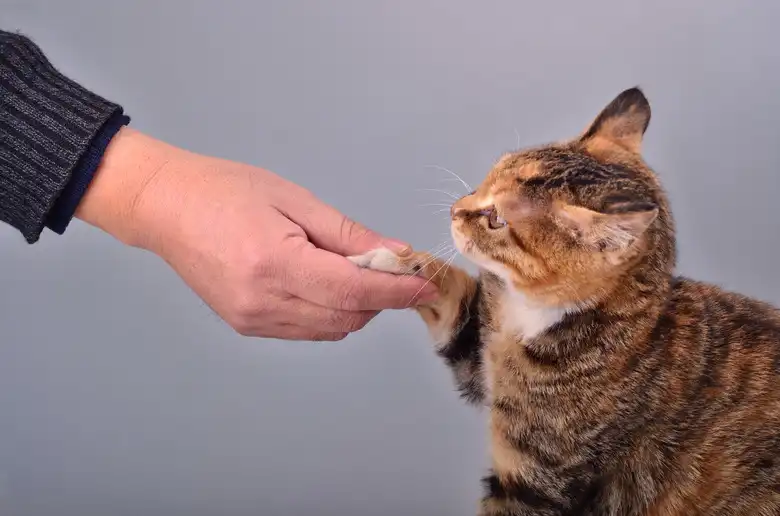
How To Train Your Cat To Shake Hands
CatsCat TrainingHow To Train Your Cat To Shake HandsByVanessa SalviaDec 7, 2018 6:07 pm ESTsanyanwuji/iStock/GettyImages #p96b7a9867259259447b41da4e162d888, #p96b7a9867259259447b41da4e162d888 img { aspect-ratio: 4928/3264; height: auto; }Wait, what? Training cats to shake hands? Only dogs do that, right?Wrong! I've successfully taught three kittens to shake hands, and now I'll teach you. Here's how to train your cat to shake hands on command.Start with treatsStart with treatsFirst, go out and get a bag of high-quality cat treats. Start saying "shake" and touching their paws and giving them treats. You don't have to treat them every time you say the word, but do it often enough that they began to associate the word "shake" with the paw touching and the treat.Next, sit in front of them at their eye level. Say in a clear, friendly voice, "shake," and then touch your paw with their hand and "hold" it briefly.. Right after that, give them a treat and some encouraging words and some petting. Repeat this with each cat over a period of about half an hour, then take a break.More Like ThisCatsHow to Teach Your Cat to Play DeadCatsHow to Train Your Cat to Give KissesCatsHow to Get Your Cat to Come When You CallAbove: my cat, Fluffy, in action!Encourage the actionEncourage the actionThe next day, repeat the same action, but hold a treat in between your fingers, put your hand (with the treat in it) in front of the cat's face, and say "shake."When I did this, I noticed it seemed like they were wanting to move their paws when they heard me say "shake," but they seemed a little uncertain about it. I could see the little wheels turning in their minds, but they didn't quite have it down yet. I continued the reinforcement with the words, the actions, and the treats with lots of petting for about another hour that second day.The third day is really when it all came together. They saw me hold up the treat, they heard me say "shake" and they actually started to reach toward my hand with their paws on their own! I immediately rewarded them by giving them the treat and telling them "Good girl" or "Good boy" with lots of petting.piranka/iStock/GettyImages #e7323f6de79f82c17bbe4e353d01e71fd, #e7323f6de79f82c17bbe4e353d01e71fd img { display: block; aspect-ratio: 1.5001374759417On the fourth day and for about a week thereafter, go to your cat at random intervals and ask them to shake, then give them a treat. I did this a few times each day whenever I thought about it, not on any particular schedule. They pretty much performed the shake each time, and if they didn't do it right away I touched their paw and said the word again to give them a little reminder.Repeat this action as many times as necessary. For me, after that week, I would ask my cats to shake without letting them see that I had a treat, and they still gave me a shake. Now, it's such a practiced behavior that months can go by and Fluffy, the cat I still have from the bunch, will still do it right away.Other methods of cat trainingOther methods of cat trainingReader's Digest gives a synopsis of how to teach a cat to shake hands, and it's very similar to what I did. The main difference is that they suggest offering the cat a mix of canned cat food and chicken baby food on a baby spoon. After you say "shake," tap the paw you want them to shake with. After the cat moves her paw, say "good" or whistle, and offer the food.Many professional cat trainers use a clicker, a device that makes a clicking sound when it's pressed, to train cats to shake. The trainer clicks the clicker and offers a treat reward. Then, when the cat associates the clicker with the reward, the next step is to associate the clicker with an action, like raising their paw.w-ings/iStock/GettyImages #e5000bee879f8320f7682d7859bf25fef, #e5000bee879f8320f7682d7859bf25fef img { display: block; aspect-ratio: 1.4998579948878These methods are really quite similar to the methods of teaching a dog to shake. One method is to hold your hand near your dog and notice whenever your dog moves her paw the way you want her to. Then reward her and start giving a verbal cue. Method two involves lightly touching behind the dew claw (the extra nail on the foot) and then rewarding her when she lifts her foot. You can try similar methods with your cats, too!ReferencesReaders Digest: How to Teach a Cat a HandshakeAKC: How to Teach Your Dog to Shake HandsSeattle Times: Shelters Across US Teach Cats How to High Five
 Cat Training
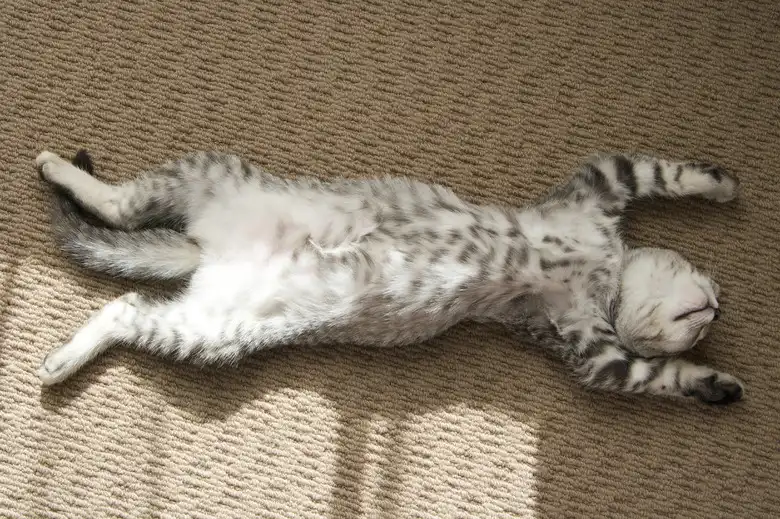
How To Teach Your Cat To Play Dead
CatsCat TrainingHow To Teach Your Cat To Play DeadBySarah LambertOct 26, 2009 7:17 am ESTKileman/iStock/GettyImages #pee15ddb5b7cb9c1007dc8ac3891e4e40, #pee15ddb5b7cb9c1007dc8ac3891e4e40 img { aspect-ratio: 3000/1999; height: auto; }TipUnlike dogs, cats have to be in the right mood to practice tricks. Never try to teach your cat trick if he is tired or uninterested. If he loses interest in the middle of the process, give him a treat and try again another time. The younger the cat, the easier it is to teach him a trick. But it is not impossible to teach an old cat new tricks.Cats are just as smart as dogs, and can learn to play dead if they have a good relationship with their owners. Patiently and kindly approach the cat when it is in a good mood to teach this trick. Then, placing one hand on the cat's back and the other pointed at its head like a gun, you can give the command and teach the cat to flop over and play dead.Step 1Call your cat's name. Grab your cat's favorite treats and urge him to come to you. This is a positive way to start the training.Step 2Place a treat where your cat can enjoy it. Give this treat and pet her when she arrives, saying her name and using soothing tones. Check to see if she is relaxed and focused on you.Step 3Place your hands into position. Place one hand gently on his back and, with the other, point at his head. The hand pointed at his head will act as the "gun" that will influence your cat to "die."Step 4Say "bang, bang" or "play dead." Gently press down on your cat's back, until she reclines or stretches on the floor.Step 5Release the cat. Praise him and give him a treat. Repeat the process until you no longer need your hand on the cat's back for him to obey the command.ReferencesThe Little Book of Cat Tricks; Sandra Toney; 2002
 Cat Training
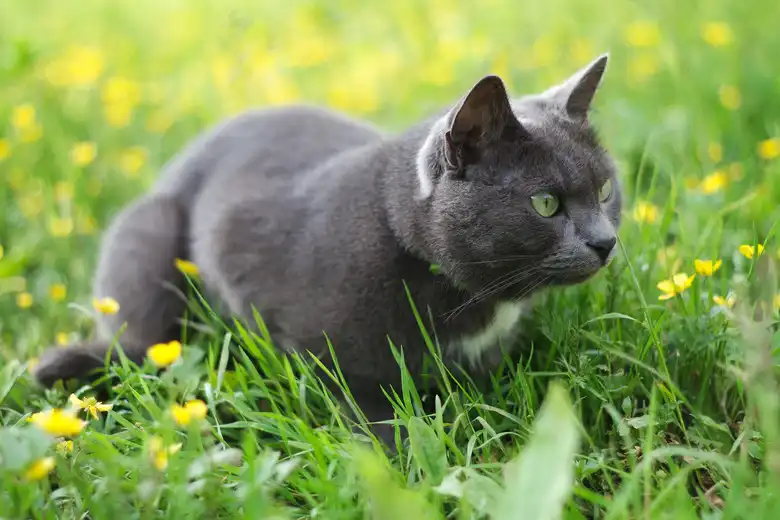
How To Make Cats Stop Pooping In Flower Beds And Gardens
CatsCat TrainingHow To Make Cats Stop Pooping In Flower Beds And GardensByStephanie SokolUpdated Aug 12, 2021If you imagine life as a cat, it isn't hard to see the world as a playground and every mound of dirt a potential litter box. Whether or not you like cats, you probably don't want them scrounging around and making a mess in your garden. There are many safe deterrents that discourage felines from exploring your plants.vvvita/iStock/Getty Images #e8105e8793ef0c2250487bda8edec69b0, #e8105e8793ef0c2250487bda8edec69b0 img { display: block; aspect-ratio: 1.4693534844668Finding the best cat repellentFinding the best cat repellentThe solution to discouraging cats from defecating on your outdoor plants may be as simple as making your garden unappealing to wandering felines. Cats aren't lovers of water, so a motion-activated sprinkler may keep felines away. Additionally, ultrasonic devices that emit a high-pitched sound can be great cat deterrents.These items can be concealed in foliage or used as garden decor. Newly planted foliage is especially vulnerable to cats since felines are drawn to fresh dirt. Consider protecting fresh plantings with fine netting or by laying chicken wire directly onto the soil. Plants can still grow through it. Another option is to use mesh vegetable bags from your grocer, but if you go this route, make sure they are secured so they don't end up blowing away as litter and endangering animals in the wild.Placing prickly items, like pine cones or mounding pea gravel, around plantings won't cause cats any harm, but these ground covers aren't as kind to paws as a freshly tilled mound of dirt. Cats love to dig, so pressing popsicle sticks or plastic forks into the soil around your plantings might be enough of a deterrent to encourage them to do their digging elsewhere.Natural deterrents for catsEvgenyZavedeev / 500px/500px Prime/GettyImages #pbb740649268a70a3d37d4443b7ffc4b6, #pbb740649268a70a3d37d4443b7ffc4b6 img { aspect-ratio: 5472/3648; height: auto; }Natural deterrents for catsA look into your cupboard might reveal some natural cat deterrents. Cats aren't fond of citrus, so consider placing orange or lemon peels around your garden area. Coffee grounds might also cause the neighborhood felines to turn up their nose, as may red pepper. A good rain will wash away the coffee and pepper and cause the citrus to lose its scent, so replace these frequently if you find that they're working.The scent of vinegar is a natural cat deterrent. Dilute and add vinegar to rags and scatter them through your garden to discourage cats from digging or defecating there. You can also make homemade cat repellent spray using dried mustard, cayenne pepper, and various essential oils.Things you find outside can also work well as cat deterrents. Branches and sticks can be arranged to protect your plants. In addition, river rocks can be a good option to deter community cats from your garden. Not only will they prevent them from digging up your plants but they will also prevent weeds from growing.Best plants for cat repellentBest plants for cat repellentCertain plants act as a deterrent for felines who might want to do their business in your garden. Rue, lavender, lemon balm, pennyroyal, Coleus canina, and lemon thyme are plants that cats find unappealing.Plant them throughout your garden and plant other foliage and flowers close together to limit the fresh soil available for digging.Store-bought cat repellentKonoplytska/iStock/GettyImages #p4d9c2843b65366ecd3c0373ded82d2ea, #p4d9c2843b65366ecd3c0373ded82d2ea img { aspect-ratio: 5302/3648; height: auto; }Store-bought cat repellentCommercial products are included among the best cat repellents. When sprayed in your garden area, these may deter neighborhood cats from turning your yard into a community litter box. Check with your local nursery or retail plant provider to make sure these deterrents will not damage your plants or soil.Purchasing a cat shelter is another option, which will give the felines their own space for protection from the elements and in turn keep them away from your garden and flower beds. You can also create an outdoor litter box for community cats using wood frames filled with sand or peat moss. Note that clay cat litter should not be used in outdoor litter boxes.ReferencesI Must Garden: Tips for Repelling CatsDavid Suzuki Foundation: How To Keep Cats Out of the GardenAlley Cat Allies: How To Live With Cats In Your NeighborhoodAlley Cat Allies: Humane Deterrents
 Cat Training
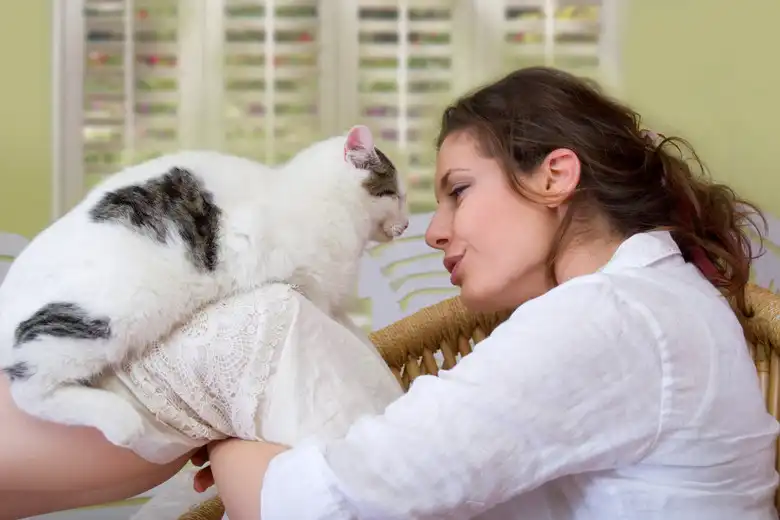
How To Train Your Cat To Give Kisses
CatsCat TrainingHow To Train Your Cat To Give KissesByLisa MercerJun 12, 2008 7:10 pm ESTMaximastudio/iStock/GettyImages #pd76eea2258264ec9e05ebe628c74db0e, #pd76eea2258264ec9e05ebe628c74db0e img { aspect-ratio: 3504/2336; height: auto; }Things NeededA CatBaby FoodCream CheeseCat TreatsTipMost cats love to be scratched behind the ears. This is a good reward for giving a kiss.WarningSome cats, especially those that have been abused, will occasionally snap at their human companions. Proceed with caution.It's hard to look at an adorable pussy cat and not feel a rush of love and affection. That said, cats do not have the reputation for being "kissey" creatures. However, like most other animals, they can be trained.How to Train Your Cat to Give KissesStep 1Place some cream cheese or baby food on your finger or cheek.Step 2Call your cat. Point you your face or finger and say "kiss."Step 3Praise your cat by petting him and giving him a cat treat. Eventually, your cat will discover that he actually enjoys kisses.
 Cat Training
The Best Ways To Get Your Cat To Work Out With You
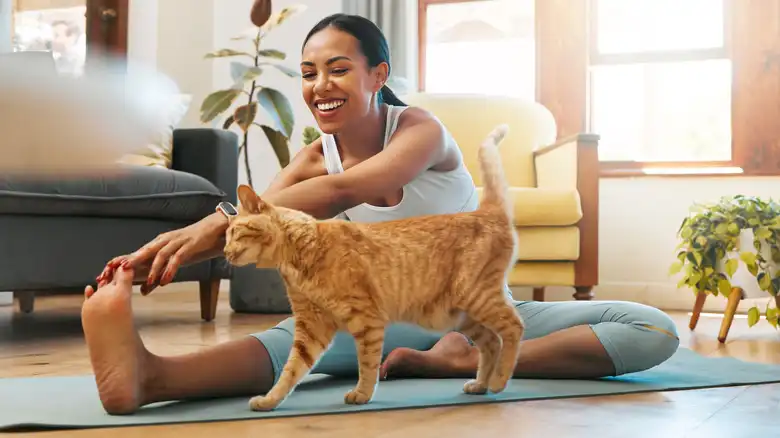
CatsCat HealthThe Best Ways To Get Your Cat To Work Out With YouByCynthia AnayaMay 7, 2025 9:25 am ESTPeopleImages.com - Yuri A/ShutterstockDogs have long been considered man's best friend, partially because of their loyalty and desire to be in their humans' company, but cats can exhibit these same qualities. They might seem lazy at times, and you'll probably never see one run a 5K alongside its human like you'd see a dog, however, that doesn't mean your feline friend can't be your workout buddy. There are many ways to get your cat to exercise with you or include them in your solo workouts while they exercise their senses. For example, you could walk your cat or push it in a stroller outdoors, or encourage it to chase you around the house. Cats benefit from exercise and mental stimulation, just like humans and dogs do. If your cat is your BFF or just loves being around you, working out with it can be an opportunity to strengthen your bond. Just keep in mind that some activities require training, or your cat might flat-out hate them. Always make sure your kitty is comfortable and safe during whichever exercise you choose, be flexible, and have fun!Walk your cat, push it in a stroller, or pull it in a bike trailerDaria Kulkova/Getty ImagesSome cats enjoy a leisurely leashed walk around the block or through a park, just like dogs do. If your cat is already leash trained, you can both exercise together by walking half a mile, a mile, or however long you and your cat can handle outdoors. If not, it's never too late to at least attempt to leash train a cat, but it might be more challenging for adult cats. Just be patient with the process, start with harness training, and follow up with brief indoor leash training sessions before heading outdoors.If Mr. Felix or Ms. Luna won't cooperate with being walked for any reason, or if you want to add some speed to your cardio routine, consider pushing him or her in a pet stroller. Some pet strollers are designed to travel only about 3 miles an hour. Others can go faster, so read the product description to be certain you're choosing the style you want if you're shopping around for one. You can walk, jog, or run while pushing your feline in a stroller, but you might have to take time to stroller train your cat.Pulling your cat behind you in a pet bike trailer is another outdoor cardio option for you. This option allows you to cover more ground at a faster speed while your cat gets to see more squirrels, birds, and rabbits along the way.Use your cat for strength or resistance trainingKilito Chan/Getty ImagesMost healthy adult cats weigh about 7 to 12 pounds, while male Maine Coons can reach up to 25 pounds. You probably pick your cat up several times throughout the week, or maybe throughout the day, so why not do it as part of your strength/resistance training routine a couple of times a week? That is, assuming it will cooperate.If your cat enjoys lying on you, try doing weighted pushups while it's relaxing on your back, but start slowly. You might also want to add a weighted blanket on your back first to make the workout more challenging. As another option, simply hold your cat while you do squats or lunges. Or, if you have a pet backpack, wear it with your kitty inside — if it doesn't mind — while doing your exercises, allowing you to carry dumbbells simultaneously. You can also do bicep curls and upright rows with the weighted backpack, or with your cat in its carrier.Is your cat a fan of hiding in cardboard boxes as many are? If so, try adding a couple of light dumbbells (5 to 10 pounds each) to a large, sturdy box and place your feline friend's favorite blanket and some catnip on top. Once your cat is inside and comfortable, slowly and gently lift the box in front of you from the bottom and do some deadlifts.Give your cat a reason to chase you around the houseScaliger/Getty ImagesWant to get your kitty to run with you? Grab a laser pointer or any other toy that it will want to chase. Jog around your house while pointing the laser, or tie a long string on your cat's favorite teaser or mouse toy and attach it to your ankle before jogging around. This can be a great warmup for you before doing your other exercises for the day.These activities benefit your feline both physically and mentally, but keep a few things in mind to ensure that they stay enjoyable. Laser pointers are safe to use with cats, if you use them correctly. Never flash the laser directly at your cat's face or in an area that you don't want it jumping on, like your kitchen counter. You should also allow your pet to catch the dot or toy every now and then to keep it interested in the chase, and to reward its hard work.Get your cat its own walking padRachel & Jun's Adventures! / YouTubeMost walking pads reach a maximum speed of 3 to 6 mph, and many feature a space-saving design, making them the perfect compact cardio equipment for cats. Assuming you have a treadmill or your own walking pad, you and your cat can get your heart rate up together. Unlike other options, however, this one will likely involve the most training; cats don't typically stay on a moving walking pad for more than a few seconds after first setting their paws on one.To train your cat to use a walking pad, place some food on the motor cover area where the digital display is before turning on the pad. Encourage your cat to walk on the pad as it pursues the treats, and give it time to get comfortable on the motionless belt. After it seems confident (which may take a few days), turn the pad on as your pet chows down on the snacks. Then, gradually increase the speed. It should be fast enough to require some effort to get the treats, but slow enough to keep your cat engaged and prevent it from jumping or falling off.Keep in mind that some cats may never warm up to a moving walking pad, or they might not stay on it for more than a few seconds before running off. If you do have success, however, this can be a great way for you and Kitty to burn calories together, doing the exact same thing, even if it's for only a few minutes. Regardless of what exercise you try, finding one that both you — and your cat — enjoy can help make those workouts a little less tedious.
 Cat Training
Keep Cats Off Your Houseplants With One Ingredient From The Kitchen
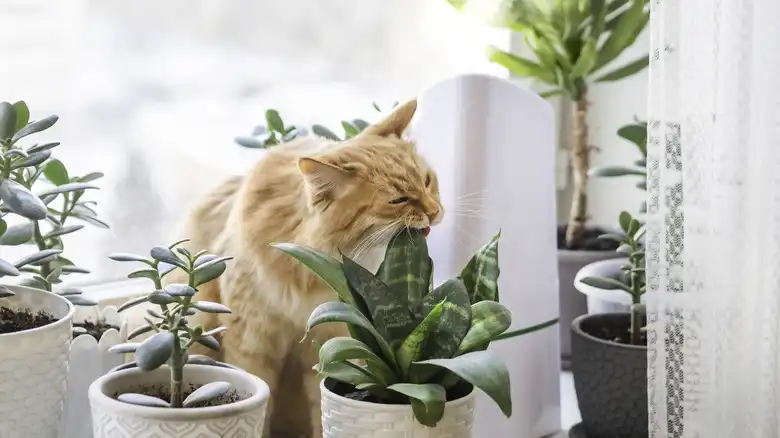
Pet ParentingHacksKeep Cats Off Your Houseplants With One Ingredient From The KitchenByJessica DesrosiersDec. 16, 2024 9:25 am ESTKonstantin Aksenov/Getty ImagesYou just brought home a brand new, beautiful houseplant, only to find your cat digging away in the soil and munching on the leaves. You only turned your back for a few moments; yet, there they are, destroying your chances of ever developing a green thumb. Do they have a plant radar or something?As it turns out, cats love to use their mouths to investigate their surroundings. The wiggling of houseplant leaves, combined with the fun, diggable dirt may just be too enticing for your kitty to avoid. However, this natural instinct can be dangerous for your feline, as many indoor plants are poisonous to cats if eaten. Luckily, there's a simple solution right in your kitchen that can deter cats from houseplants: lemons. The strong citrus scent combined with your kitty's heightened sense of smell typically makes the fruit unpalatable to them, keeping them far away from whatever you place the lemon near.To try the hack at home, take an unpeeled lemon, cut it into slices, and put the pieces in the dirt around the plant you wish to protect. The aroma diminishes over time, so it's a good idea to replace the lemons after they've dried out or stopped emitting a scent. According to PetMD, you can also create a spray that serves the same purpose by boiling 3 cups of water, turning off the heat and steeping a ½ cup of fresh rosemary in the water overnight, straining the rosemary out, and combining the herb-infused water with ¾ cup distilled white vinegar and ¼ cup lemon juice in a spray bottle. Give it a shake and then spritz it on your plants (or even your Christmas tree).What to consider before using lemon as a cat deterrentViktor Sergeevich/ShutterstockCitrus fruits contain chemicals that can be poisonous to cats. One ingredient, psoralen, can cause skin irritation and dermatitis if a feline is exposed to the juice. Lemon also contains the essential oils limonene and linalool, which are most concentrated in the peel. These irritants can lead to digestive issues such as vomiting, diarrhea, drooling, and neurologic problems if eaten in large amounts.Thankfully, per Wag's Dr. Linda Simon, most cats will avoid citrus scents, and it takes a very large amount of lemon ingestion to cause severe symptoms. If you are concerned, using a quick-drying spray or peeling your lemons before adding them to your plants may help. In most cases, your cat will be deterred enough by the scent to steer clear of taking a bite. However, if they do eat part of any citrus fruit, you should seek help from a veterinary professional immediately. If your feline is somehow enticed by lemon, trying out other houseplant hacks for cats like the aluminum foil trick may work better.
 Cat Training
Automatic Cat Feeder Pros And Cons - Are They Worth It?
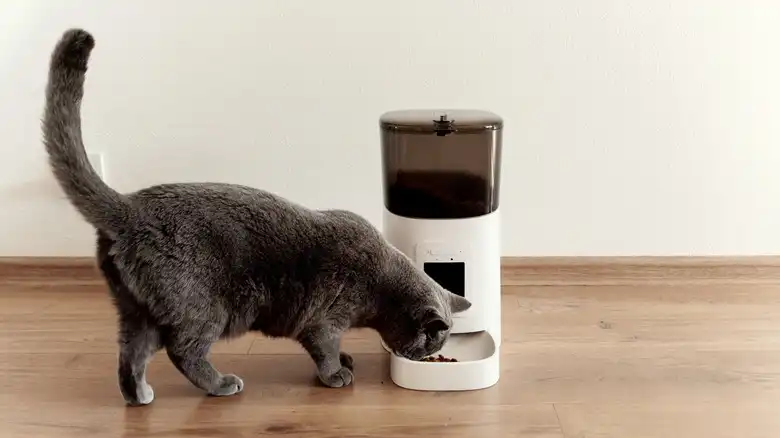
CatsCat NutritionAutomatic Cat Feeder Pros And Cons - Are They Worth It?ByCynthia AnayaApril 11, 2025 9:25 am ESTVadym_Hunko/ShutterstockIt may seem like a 21st-century invention, but the first patented time-controlled feeding device actually appeared in the 1940s. Now, automatic cat feeders are taking over TikTok and are available in dozens of different styles in pet stores and online. These devices are designed to dispense food at pre-set times once, twice, or several times a day. Some also include a camera, two-way audio, and Wi-Fi, among other nifty features — but are they worth the price? The answer depends on the pros and cons of the model you buy, along with your needs and preferences.You can find a standard automatic cat feeder, sans bells and whistles, for under $25, while other models that offer high-quality features cost almost $300. This wide range offers the convenience of accommodating both small and large budgets. Maybe you don't want a camera, or perhaps you don't plan on using any type of audio setting. Or, maybe you want a feeder with all of the above, or you need a dual dispenser for two cats that don't like to share. Regardless of which boat you're in, every feeder has a list of pros and cons to consider.Automatic cat feeders offer convenience, consistency, and portion controlVadym_Hunko/ShutterstockAn automatic feeder adds to the many conveniences of being a feline parent. Simply fill the storage tank with food, select the meal quantity, and create a cat feeding schedule, eliminating the need for daily manual feedings. This can be especially beneficial for cat parents who spend extended periods of time away from home or have very busy schedules. Having an automatic feeder can also abolish your cat's need to paw at your face to awaken you or to whine incessantly, demanding to be fed. Instead, you may find it hanging out or pawing at the feeder as meal times approach.These feeders also provide the benefit of consistency. Many parents who feed their cats manually don't do so at the exact same time every day, especially if they're shift workers. For example, Kitty's breakfast might have to be at 5 a.m. for several consecutive days before shifting to 9 a.m. on others. Using an automatic food dispenser means your cat can have its daily meal(s) at the same time every single day, regardless of your schedule.Another advantage of automatic cat feeders is portion control. If you want to prevent your cat from overeating or temporarily limit their caloric intake for weight loss, you can determine the food amount for each meal.Automatic cat feeders can attract unintended eatersfelixmontana/ShutterstockJust as with any other electronic device, an automatic cat feeder can malfunction, which could equate to missed meals; a feeder powered by electricity can fail due to a power outage, and batteries eventually die or degrade. With these possibilities in mind, choose a feeder that offers battery powering and a low food alert, or one that notifies you when meals are dispensed. You can also mark the date that you fill the feeder and the date it completely empties so you can set future fill reminders.Another potential downside to electronic feeders involves pest attraction. Owners who manually feed their cats often store the food in airtight containers, impenetrable to insects. Automatic cat feeders, however, have small openings that ants and even certain cockroaches can get into, especially if they're placed on the floor. To prevent bugs from sharing your cat's meals, follow the cleaning instructions for the feeder and clean it regularly.Insects aren't the only uninvited creatures that can help themselves to the kibble in an automatic food dispenser; dogs can, too. If you're also a dog parent, you might want to place the feeder in an area that the non-feline pets can't access. Alternatively, if you have small dogs, place the feeder inside a litter box furniture enclosure in the corner of a room and block the corner with pet gate panels. Your cat will have to jump over the panels to access the feeder, but at least your dogs won't eat the food. Deciding on what works for you, and your cat, can help keep everyone happy.
 Cat Training
How To Feed Cooked Chicken Livers To Cats
CatsCat TrainingHow To Feed Cooked Chicken Livers To CatsByKatherine MaloneUpdated Jun 28, 2021Irina Nedikova/iStock/GettyImages #pff3550bf2224dd1bd55acb2aa4a19b2b, #pff3550bf2224dd1bd55acb2aa4a19b2b img { aspect-ratio: 5612/3741; height: auto; }As carnivores, cats thrive on a diet that is high in protein and low in carbohydrates. The best food for cats is often a high-quality, commercial cat food, but in some cases, making homemade meals for your feline is necessary. Most cats love the taste of liver, so it can be a great ingredient to feed as a treat or in home-cooked cat food. Too much liver can be a problem, so be sure to consult your veterinarian before starting your cat on a new diet.Homemade cat food considerationsHomemade cat food considerationsCommercial cat foods meet the nutritional standards developed by the Association of American Feed Control Officials. Whether you opt for dry or canned food, this is usually the best option for most cats. However, in some cases, cats may need an alternative food that you make from home. This could be because of food allergies or another medical condition.Chicken liver is one ingredient that may be used as part of a homemade meal. If you opt to cook for your cat, be sure to consult your veterinarian and get an approved recipe. This will ensure your cat is getting the nutrients and calories she needs to stay healthy. You can also find recipes based on the ingredients you have at BalanceIT.com, a site created and managed by board-certified veterinary nutritionists.You can also give your cat some chicken liver as a special treat. Make sure not to feed too much as the calories from treats should only make up about 10 percent of your cat's daily calories. Make sure to properly cook the liver and avoid feeding too much which can lead to serious health problems for your cat.Cooked chicken liver for catsCooked chicken liver for catsThe liver can be a host to bacteria, so be sure to cook it all the way through to kill any microbes that may make your cat sick. As long as it is cooked through, you can use any method you please. One option for cooking chicken liver for cats is to bake it for about 20 minutes in an oven set to 350 degrees Fahrenheit. You can also boil the livers if you prefer. Boiling may cause the liver to lose more nutrients than other methods of cooking.Once the liver is cooked, you can cut it up or grate it for your cat to eat. You can add it to her dry food or feed a couple of small chunks as a treat. Alternatively, you can use it in a recipe as directed by BalanceIT.Vitamin toxicity from chicken liverVitamin toxicity from chicken liverWhile the occasional chicken liver can make a tasty treat for your cat, regularly feeding liver and other organ meats can lead to serious problems. Liver is high in vitamin A and, if consumed in large amounts, can lead to toxicity. The amounts vary as some cats tend to be more susceptible to high levels of vitamin A than others.The main symptoms of toxicity include stiffness in the joints caused by bone growth and arthritis. In severe cases, joints and even vertebra can fuse together. These conditions are incredibly painful for your cat and can severely restrict her movement. Cats may also experience paralysis, gastrointestinal symptoms, and coagulopathies, a condition in which the cat's blood becomes unable to clot. Changing your cat's diet may help improve some symptoms, but much of the bone damage may be permanent.ReferencesCat Info: Making Cat FoodVCA Hospitals: Vitamin A Toxicosis in CatsCornell University, College of Veterinary Medicine: Feeding Your CatBalanceIt.com: Autobalancer EZ For Healthy Adult Pets
 Cat Training
How To Introduce A Cat To A New Litter Box
CatsCat TrainingHow To Introduce A Cat To A New Litter BoxByKylie Ora LobellUpdated Feb 22, 2021We may receive a commission on purchases made from links.Cuteness may earn compensation through affiliate links in this article.Cats are not exactly easygoing creatures. Typically, they don't like change.However, you're not a fan of your cat's current litter box and you want to buy a new one. There's only one problem: You aren't sure how your cat is going to react. Will he start going on the floor? Is he going to make a mess of the new litter box? Will he find a cardboard box to do his business in instead? Before you spend the money, you need to ensure that your cat will end up using this new litter box and everything will go smoothly.Here are some tips on how to make sure the transition goes well.BiancaGrueneberg/iStock/GettyImages #ee47e60a2c41988858be050a664e5ab54, #ee47e60a2c41988858be050a664e5ab54 img { display: block; aspect-ratio: 1.5How to introduce your cat to the new litter boxCasarsaGuru/iStock/GettyImages #pbab19812d74a648279a723339fbac740, #pbab19812d74a648279a723339fbac740 img { aspect-ratio: 5184/3456; height: auto; }How to introduce your cat tothe new litter boxThere are a number of ways to introduce your cat to a new litter box. First, it's best to only change the litter box and nothing else at first. This means you should keep the litter box in the exact same spot as the old one and use the same kind of kitty litter. Then, put something your cat loves next to the new litter box. This could be his favorite toy. You could also keep the old litter box around but stop cleaning it, and only clean the new one. This may be effective because cats prefer to go in clean litter boxes.When your cat does use the new litter box, make sure you reward him with a treat. Since cats have short attention spans, it's best to reward them as soon as possible after they do something good. For the first few days that you have the new litter box in your home, you should stand by it, ready and waiting with your cat's favorite treats. Every time he goes to the bathroom in his new litter box, give him a treat and pet him so he learns that he's doing something good. Eventually, you can start cutting down on the treats. Once he starts using it consistently, you can start cutting back and replacing a treat with a rub on the head or by saying "good kitty" instead. Then, once your cat is going in the litter box for a few weeks without any rewards, you know you won't have to use them anymore.Keep in mind that you should never punish your cat for having an accident outside the litter box or force him to use it. Since their memories are not very good, your cat will forget what he's done wrong as soon as you punish him. He could become fearful and may not want to be around you if you yell at him. Always emphasize rewards instead of punishments.What if your cat won’t use the litter box at all?What if your cat won'tuse the litter box at all?If your cat has an issue with using litter boxes in general, you can clean soiled areas around your house with a special urine deodorizer so that your cat won't be encouraged to go there again.If your cat has been eliminating on soft surfaces in your home like on your couch or your carpet, then you could switch up the litter and try using one that's made of pine shavings. You could also add shredded newspaper or place a piece of carpet in the litter box.Your cat might not be using the litter box because he doesn't like where it's placed. For example, he may prefer it to be in a quiet and more protected place like in a closet or underneath a desk rather than out in the open. Additionally, if you have a kitten or an old or sick cat and you live in a house with multiple levels, you'll need a litter box on every level.Ensuring the litter box is clean at all times is very important. This means you'll need to scoop it a couple of times every day and empty it completely and scrub it with soap once every three weeks. You should replace the litter box and the scooper at least once per year if you have one cat and more often if you have additional cats.Finding a new litter box for your catFinding a new litter box foryour catWhen you're ready to purchase a new litter box for your cat, try PetSafe ScoopFree Automatic Self-Cleaning Cat Litter Box. You won't have to scoop, clean, or refill your kitty's litter box for weeks on end, and the crystal litter will remove the smell because it absorbs urine and dehydrates solid waste. Plus, the low-tracking crystals are 99% dust free and will not stick to your cat's paws. The litter box even monitors your cat's health by tracking how many times he uses the box.For something a little simpler, try the Frisco High Sided Cat Litter Box. The front wall has a step-in design so that your cat can easily get in and out, and the high sides reduce cat spray and litter splatter. Since it's made of high-quality plastic, your cat can dig and paw without damaging their box. It's BPA-free and recyclable, which means it's good for the environment, too.Conclusionondacaracola photography/Moment/GettyImages #p34c8d2f0e7e0ba42e9c213d1e6ee1550, #p34c8d2f0e7e0ba42e9c213d1e6ee1550 img { aspect-ratio: 5184/3456; height: auto; }ConclusionCats don't love change, but by taking it slowly, you can introduce your cat to a brand new litter box. You'll need to invest in the right litter box and reinforce good behaviors by rewarding your cat with his favorite treats to ensure he keeps on using his litter box with ease.ReferencesTop Litter Boxes: How To Introduce Your Cat To A New Litter BoxCat Litter Help: How to Introduce Your Cat to a New Cat Litter or Litter BoxThe Human Society of the United States: Solving litter box problemsHumane Society of Huron Valley: Training Cats With Positive Reinforcement
 Cat Training
Never Skip These Crucial Steps When Leash Training A Cat
CatsCat TrainingNever Skip These Crucial Steps When Leash Training A CatByCynthia AnayaMarch 25, 2025 9:25 am ESTAjr_images/Getty ImagesWho says only dogs can enjoy a stroll around the neighborhood at their owner's side? Cats can be trained to be walked on a leash, just like their canine counterparts. The best time to leash train a cat is around 8 weeks of age, or as soon as they're big enough to fit into a harness. However, older cats can learn to walk on a leash, too, with a little more patience from their humans. You can increase the odds of successful leash training by getting them comfortable with a harness, walking them indoors first, starting with brief outdoor walks, and limiting their walks to places where they feel safe.Although many cat owners have found success using these steps, there's no guarantee that every cat will cooperate, even after months of training. The training period may also vary from cat to cat; some cats warm up to the harness and leash within a few days or weeks while others take much longer. Some cats don't mind wearing a harness, but refuse to be walked with a leash. You won't know how your cat will react unless you try, but these crucial steps can help streamline the training process for you both.Start with harness trainingW. N. Sulistyatanto/ShutterstockMany cats can squeeze into or out of small spaces, due to their flexible shoulder blades, so you'll need to use a harness for leash training. This will lower or even eliminate the risk of them slipping out. Measure your cat or kitten to ensure you purchase the right size, but keep in mind that you may need to adjust it or buy a new one as they grow. Don't put your cat's harness on right away. Instead, leave it lying around for them to sniff. You may even want to place it near their bed to get their scent on it.After your cat appears comfortable with the harness, place it over their body, buckle it, and adjust it as needed — if they let you. Some cats cooperate, but others wiggle around in protest. If your cat treats the harness like an invasion of their personal space and flops over on their side, remove it and try again later or another day. Reward them with praise and some crunchy cat treats while they're wearing the harness. They may also appreciate a few head or chin scratches to help with positive associations.Once you see that your cat has approved of wearing the harness, leave it on them while they walk around the house. You may want to start out with just 10 minutes a day and then gradually increase the time. You may also want to wait a few weeks before introducing a leash to the harness, but again, every cat is different. Your cat could be ready sooner or later.Leash train them indoorsVeera/ShutterstockOf course, you can't walk a pet without a leash, so this will be the next item to introduce to your cat. The initial introduction can take place after your cat is harness trained, but it won't hurt to leave the leash lying around during harness training. Opt for a short, standard, lightweight leash. Attach it to the harness and hold the other end ensuring there's no tension. Follow your cat as they walk around for a bit, and then drop the leash so that it will drag — but be sure to monitor them so it doesn't get tangled on any objects. This will allow them to get used to the feeling of minor tension. Just as with the harness, keep the leash attached for short periods of time at first as your cat adjusts.When your cat starts walking around freely while dragging the leash, take hold of the leash and gently pull on it to lead them in a specific direction. Continue using positive reinforcement during this step, encouraging them to walk and rewarding them for cooperating. Repeat these steps for a few days, if not longer, until your cat allows you to walk them as you apply tension and guide them.Lead them in brief outdoor walking sessionsJulia Kozlov/Getty ImagesIf your cat has lived their entire life indoors, they will likely be a bit skittish to be outdoors for the first time, so be patient. On the other hand, even a cat with outdoor experience may be hesitant to be outside while harnessed and attached to a leash. Place the harness and leash on them indoors. Depending on your cat's outdoor experience, behavior, and curiosity level, you can either carry or walk them outside. You can also opt to place them in their carrier and open it outside with the hopes they'll want to explore on their own. Use treats to lure them so they'll associate the outdoors with something pleasant.A great place to leash train a cat outside is in a fenced-in yard, ideally on a warm, dry day. Allow them a few minutes to first get comfortable with their surroundings, especially if they've never been outside before. Then, take the leash and start walking them around the yard. Aim for just a few minutes the first time, unless they seem comfortable with a longer walking session. Repeat these brief walking sessions in an enclosed area for a few days, or however long it takes for them to appear confident and secure.Walk them where they feel safeDmitrii Marchenko/Getty ImagesWhen your cat is ready to take their leash walking to the next level, you can exit the backyard. Head for the sidewalks in your neighborhood, as long as they're not near a busy road. Start by walking a few hundred feet from your home, ideally at a time of day that isn't too busy. Be mindful of things that may frighten your cat, such as dogs or trains, and be prepared for potentially negative behavior in response to these stimuli.If your neighborhood sidewalks pose too many distractions to your cat, consider taking your cat to a more peaceful park or wooded path. Some cats adapt well to their surroundings, even if they include vehicles, other people, dogs, and loud sounds. Your cat might adapt to a similar atmosphere, too, but it might take a while for them to get there.Sometimes, regardless of where you walk your cat and how much effort you put into training them, some cats never find comfort with being walked on a leash. They might be comfortable one day and have a terrible experience the next that prevents them from ever wanting to venture out again. If you find yourself in this position, but you still want your companion to enjoy some fresh air with you, you may have better luck stroller training your cat. A little time, patience, and lots of positive love can help ensure your cat has a good experience.