 Cat Behavior
My Cat Is Gnawing On My Fingers
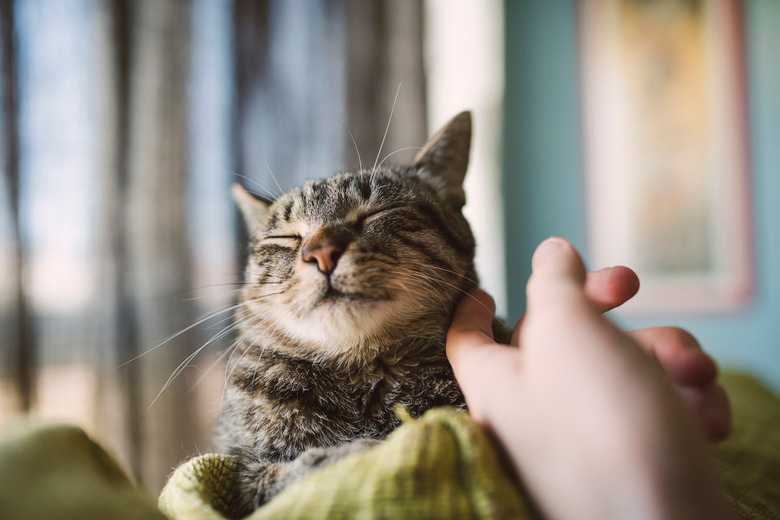
CatsCat BehaviorMy Cat Is Gnawing On My FingersByLisa McQuerreyUpdated Aug 25, 2021If you find your kitty gnawing on your fingers, it could be a playful gesture, a throwback to kittenhood, or an act of aggression. Identifying what's behind the kitten nibbling on hand can help you take appropriate action to curb the unwanted behavior. If gnawing progresses to biting, a trip to a vet or cat behavioralist may be in order.Linda Raymond/Moment/GettyImages #ec43e1d834a7b9146fc23472c01a2d315, #ec43e1d834a7b9146fc23472c01a2d315 img { display: block; aspect-ratio: 1.5Kitten nibbling on handKitten nibbling on handA young kitten's gnawing could be a way to soothe sore gums irritated by teething. Your kitty may view you as a mother substitute and chew in the same way she used to nurse from her mother, or play bite with her litter mates. Kitten biting fingers can be cute when the cat is very young, but can become a learned behavior that the cat may carry into adulthood. Curtail the behaviors when they start, no matter how cute they may be, or you'll have a tougher time down the line. When gnawing starts, give your kitty something more appropriate to chew, like a toy, and walk away and ignore her if she won't be deterred.Playful fun and gamesWestend61/Westend61/GettyImages #pba76b370420ad797098c62f8930dca57, #pba76b370420ad797098c62f8930dca57 img { aspect-ratio: 6016/4016; height: auto; }Playful fun and gamesYour cat may enjoy the play biting and finger gnawing because it means fun, interactive time with you. If you've encouraged the behavior in the past, or allowed it to go on and engaged in a positive way, you've reinforced the idea that it's a good thing. Transition to other forms of interactive play with your cat, such as with a feather dancer, laser pointer, or string.Keep your fingers away from her mouth when grooming or petting, and walk away when she starts to bite. Avoid toys that encourage playing with or biting at your fingers. Believe it or not, sometimes a kitting biting fingers means that the cat doesn't want you to stop petting her or giving her attention.Kitty may be stressed outKitty may be stressed outCats can become stressed or develop obsessive-compulsive disorders, such as incessant gnawing or chewing. This typically occurs with changes in the household or stressors in the environment. Try to maintain a regular schedule for your cat to reduce the potential for this problem through regular mealtimes, a balanced diet, and a clean litter box. Make sure kitty is comfortable around other pets, human household members, and guests. If she prefers to be alone, be certain she has a place she can call her own to escape from stressors.Your hands smell goodYour hands smell goodYour cat may be chewing your fingers because they smell or taste good. Always wash your hands thoroughly, particularly after preparing pungent-smelling foods — and especially cat food. Use unscented hand creams and lotions to deter unwanted gnawing as well. If your cat bites at your fingers when you offer treats by hand, stop feeding her by hand altogether, and feed only from her bowl.Go see a professionalChalabala/iStock/GettyImages #pb55e3d2303e2128cb6b092c08525ea55, #pb55e3d2303e2128cb6b092c08525ea55 img { aspect-ratio: 5081/3387; height: auto; }Go see a professionalPlayful gnawing and nips can turn to biting if left unchecked. While it's best to address early behaviors before they reach more aggressive levels, your cat can be retrained. Bring the gnawing activity to your vet's attention so they can rule out any underlying medical or health issues that could be promoting the action. Consider consulting a pet behaviorist to help you get to the underlying cause of the problem.ReferencesHumane Society of the United States: Teach your kitten how to play niceVCA Hospitals: Kitten Behavior and Training – Play and Investigative Behaviors
 Cat Behavior
How To Tell If Your Cat Likes You
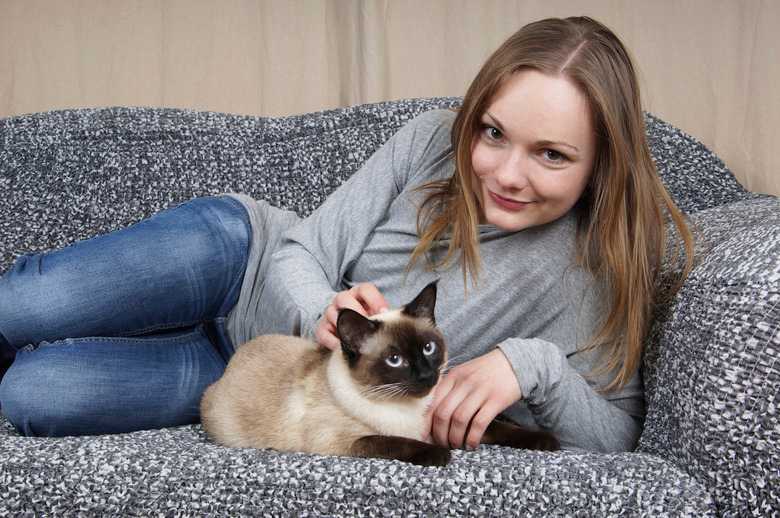
CatsCat BehaviorHow To Tell If Your Cat Likes YouByKay WikiApr 30, 2010 11:16 am ESTaxelbueckert/iStock/Getty Images #pe18653ba878ef154f2272ae068ea5f23, #pe18653ba878ef154f2272ae068ea5f23 img { aspect-ratio: 2126/1413; height: auto; }Cats are intelligent animals that are capable of feeling emotions toward their owners. Some cats love their owners while others may feel indifferent or even dislike the people in their home. Fortunately, there are ways you can determine how your cat truly feels about you.MORE: HOW TO GET A CAT TO LIKE YOUAccording to Fact Monster, cats are not spiteful animals. If your cat does something that is out of the ordinary such as not using its litter box, it doesn't necessarily mean that your cat is trying to seek revenge on you. There may be a health problem attached to this behavior. Growling, spitting, and hissing are indications that a cat is angry, aggressive, or annoyed. If your cat exhibits this behavior toward you, you may want to consult a vet or an animal behavior specialist.mercedes rancaño/iStock/Getty Images #pe7414d31d8a648721bdb0153b314d1ea, #pe7414d31d8a648721bdb0153b314d1ea img { aspect-ratio: 2122/1415; height: auto; }Step 1Observe the way your cat greets you. One telltale sign of a cat's affection is contingent on how they respond to you when you arrive home. A cat that likes you will greet you at the door. It isn't uncommon for a dog to greet his owner at the door, but a cat that loves his family may exhibit the same behavior. In general, cats are social creatures and enjoy being around people that they like.Step 2Julija/iStock/Getty Images #e5d1c9425232c7f89d749efe71f78ae9e, #e5d1c9425232c7f89d749efe71f78ae9e img { display: block; aspect-ratio: 1.4996466431095Use petting to gauge emotion. A cat open to friendship may also rub against you. In some cases, the cat may even raise his or her body toward your hand when you attempt to pet the cat. It may seem strange, but a cat may also lick you if he likes you. Cats lick each other and their owners as a way to groom and bond together.Step 3aimy27feb/iStock/Getty Images #e04bbca093f7276aac505bf969ea8dcba, #e04bbca093f7276aac505bf969ea8dcba img { display: block; aspect-ratio: 1.779830638953Listen for purring. Some cats purr to indicate their happiness. If a cat is happy living in your home, purring will be a way that the cat demonstrates affection. According to Drs. Foster and Smith, in some cases purring can also be a signal that the cat is sick or distressed. Some cats also purr to calm and reassure themselves.Step 4Michael Weirauch/iStock/Getty Images #eb88e683f2d6040ca16a83d5d3f090d62, #eb88e683f2d6040ca16a83d5d3f090d62 img { display: block; aspect-ratio: 1.5099290780142Understand the personality of your cat. If your cat is not particularly affectionate, it doesn't necessarily mean that your cat doesn't like you. Some cats are simply aloof and have a personality in which they don't seem to care about their owners. These types of cats usually want the owner around only when it's time to eat.ReferencesDrs. Foster and Smith: Why Do Cats Purr?Cat Chat: Understanding Feline LanguageFact Monster: You and Your Cat
 Cat Behavior
Why Are Cats Always Underfoot?
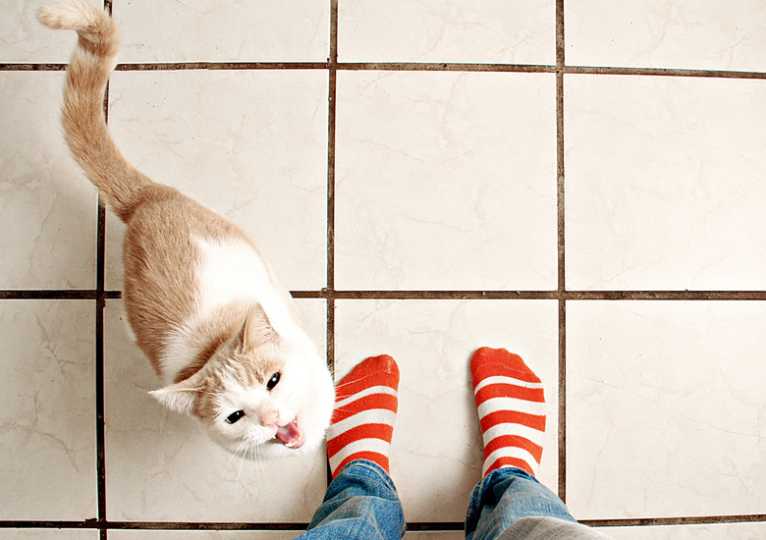
CatsCat BehaviorWhy Are Cats Always Underfoot?ByCarmen AngelicaFeb 12, 2019 1:07 pm ESTNatalieShuttleworth/Moment/GettyImages #p72774da04e0afd9a3aa9aab22ff0d8fa, #p72774da04e0afd9a3aa9aab22ff0d8fa img { aspect-ratio: 3847/2713; height: auto; }You're walking through the house when all of the sudden, a flash of fluff runs out in front of you, and you trip and fall. Yes, your cat decided to run underfoot. Again. Why? Are they trying to play with you? Do they want something? Or do they just like to see if they can trip you?It could be any of those things. There are a few different reasons why your cat might be running in front of you and impeding your journey to the opposite side of the room.ExcitementExcitementYour cat might know that when you get up and move, there is a solid chance that you might stop at their food bowl and give them some kibble. (Especially if it's around dinner time, and cats definitely know when it's dinner time!) Or that you might be making yourself a tuna sandwich and give them some leftover tuna juice? Or even just that you might play with them! This is all very exciting, and they want to let you know that they are here for it and will rub against your leg to mark you.More Like ThisCatsWhy Does My Cat Attack Me When I Get Into Bed?CatsWhy Do Cats Zig Zag Back and Forth in Front of You While Walking?CatsWhy Does My Cat Attack My Ankles When I'm Walking?Cat "herding"Cat "herding"Cats also know that the act of getting underfoot and rubbing up against your leg will make you inclined to get them to stop by giving them what they want. This form of dominance is to let you know they are in charge and will lead you to get them what they need. Although they are not actually "herding" you, this is a learned behavior to control you.Vivi Pineda Fotografía/Moment/GettyImages #ecbc43719e7bd915ac03afde4fd270778, #ecbc43719e7bd915ac03afde4fd270778 img { display: block; aspect-ratio: 1Similarly, cats will sit in the center of the room as "head of the house," and when you move, they plan on "re-centering" so you know who's in charge. These actions are usually found in bossy cats and nearly 86% of cats have been found to be "bossy cats," so if this happens to you, you are most likely dealing with a bossy cat.Cat hugsCat hugsWhen a cat walks underfoot and winds their tail around your calves, this could actually be your cat giving you a welcoming hug! Although cats have normally been presumed to be solitary creatures, research has shown that in nature cats are very pack-oriented. After hunting, wild cats will rub against one another and curl their tails around each other as a way of communing. That's why when you walk in a room you cat might run up underfoot and wrap their tail around you to say "Hi! Welcome back! I like you, pack member!".AttentionAttentionWhat's the best way to get someone to remember you are in the room? Have them trip over you. Your cat might simply be worried that you are not paying enough attention to them, and will let you know of their presence. This can become a problem quickly if you let it. If you reward this behavior with pets and snuggles this will quickly become something your cat can count on to get the notice they are demanding. A way to break this habit is to give them affection randomly so they don't feel the need to remind you they exist by tripping you.joeyful/Moment/GettyImages #e9846d09cc51526caab2ae95a29c8f41f, #e9846d09cc51526caab2ae95a29c8f41f img { display: block; aspect-ratio: 1.5656637168142Your cat can't speak. Or if she can, you have some sort of magic cat on your hands. That means when your cat is underfoot, she's trying to tell you something. Next time your cat almost topples you over, ask yourself: is it dinner time? Have I been out for a while? Have I paid much attention to her? Or is she just getting bossy right now? Pretty soon you'll understand exactly what is going on with your feline friend and figure out why they do what they do. It'll make your life easier, and will make them much happier to know that what they are communicating isn't going unheard.
 Cat Behavior
Why Does My Cat Put His Paws In The Water Bowl?
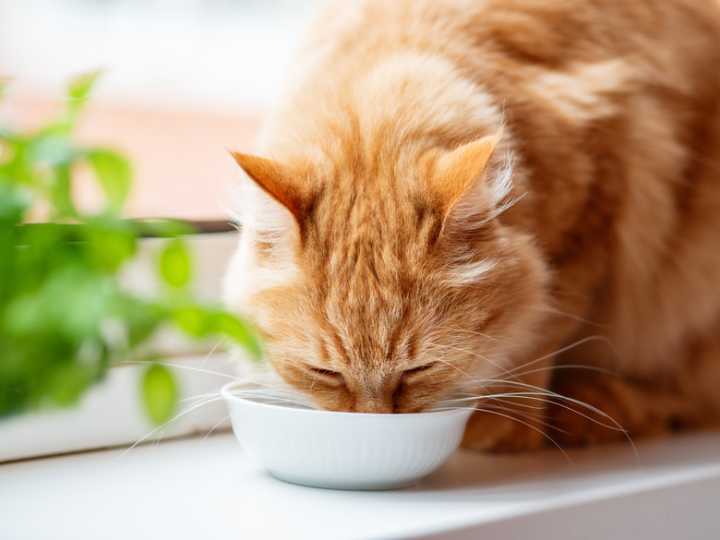
CatsCat BehaviorWhy Does My Cat Put His Paws In The Water Bowl?ByMariel LovelandUpdated Jul 1, 2021Konstantin Aksenov/iStock/GettyImages #pcb383c5d8815a9012947dbbb895e348e, #pcb383c5d8815a9012947dbbb895e348e img { aspect-ratio: 5184/3888; height: auto; }It doesn't take very long for any first-time cat owner to notice that their feline has some interesting — and unequivocally adorable — habits. This includes the zoomies (aka your pet's tendency to run around the house like a maniac for no apparent reason) or pawing under the bathroom door should you dare to ever shut him out. Among all, a cat's most renowned and bizarre habit may be his penchant to tap.Most internet users have seen viral videos of cats carefully tapping glasses of water to the ground in a fit of playful mischievousness, but their tendency to paw at water extends to just about any accessible water around the house. This includes open toilet bowls, dripping sinks, and even your cat's own water dish. Believe it or not, there is a method to the madness.Though cats can't really verbalize beyond a meow or a chirp, experts do have an idea about why your cat might put his paws in his water bowl (or your water cup should you have your head inadvertently turned away).It’s just a personal preferenceIt's just a personal preferenceIf you find that your cat is dipping its paws into a water dish or glass, and then licking off the moisture, it could just be the way your cat likes to drink. Consider it a personal preference. In the same way that you might use your hands to take a sip of water from the sink, your cat may just prefer using their paws rather than lapping it up directly from the source. This preference can form at an early age and doesn't necessarily have to do with anything else.He can't take the pressure (on his whiskers)He can't take the pressure (on his whiskers)Sometimes your cat's preference to drink from their paws extends beyond a childhood habit. They may be unhappy with the shape of their water bowl or the level of water within their bowl because of the way it feels on their whiskers. This is known as "whisker stress."Whisker stress is particularly prevalent if your cat is drinking from a bowl with a small diameter or a drinking glass made for humans. While some cats don't like feeling pressure on their whiskers, others don't mind. If you think your cat may have an aversion to drinking directly from their bowl, try replacing it with a flat, shallow dish or topping up the water so their whiskers don't brush the sides.The water isn’t fresh enoughLightspruch/iStock/GettyImages #pac9fb2c7250f40500ea481da1e884b63, #pac9fb2c7250f40500ea481da1e884b63 img { aspect-ratio: 6000/4000; height: auto; }The water isn't fresh enoughYou may notice that your cat enjoys drinking water directly from the sink — and this is no mistake. Cats are particularly sensitive to taste. Call them the divas of the pet world, but many can't stand the taste of stale water and actively prefer drinking moving water, even if they have to make the water move themselves.If your cat is dipping his paws into his water bowl, he may be trying to mimic running water. This actually compounds the problem because it helps bacteria and bits of litter build up in the bowl. You may find that your cat isn't drinking enough to stay hydrated. Instead, replace the water daily or use a fountain that keeps the water constantly moving.Your cat feels too vulnerableYour cat feels too vulnerableCats like to feel safe and secure, but they're particularly vulnerable when they're eating or drinking. For this reason, many cats feel uncomfortable when putting their heads down to drink or when drinking with their back to the room. This is particularly true for households with more than one pet, especially if there's been fights or tension between animals.To make your cat feel more secure, don't back the water dish into a corner or against a wall. Allow them to see the room while they drink. The water level also makes a difference. Make sure it's not so low that your cat can't see over the edge of the bowl. In a multi-animal household, you may also want to give each animal their own drinking station.Your cat is playing aroundNils Jacobi/iStock/GettyImages #p0559d57524a8179474fab8582a159e1a, #p0559d57524a8179474fab8582a159e1a img { aspect-ratio: 5600/3738; height: auto; }Your cat is playing aroundYour cat's water bowl may be in the perfect position with the perfect amount of fresh water but he's still pawing away and leaving little wet paw prints around your kitchen. In this case, your cat may simply like to play with his water.If you think your cat may be playing because he's bored, try offering it alternative toys that deter him from splashing around. It never hurts to spend a few extra minutes a day playing with your pet.ReferencesPam Johnson-Bennett: How Appealing Is Your Cat's Water?Cat Health: Why Do Some Cats Dip Their Paws in the Water Bowl?Pam Johnson-Bennett: Why Does My Cat Put Her Paw In the Water Bowl?
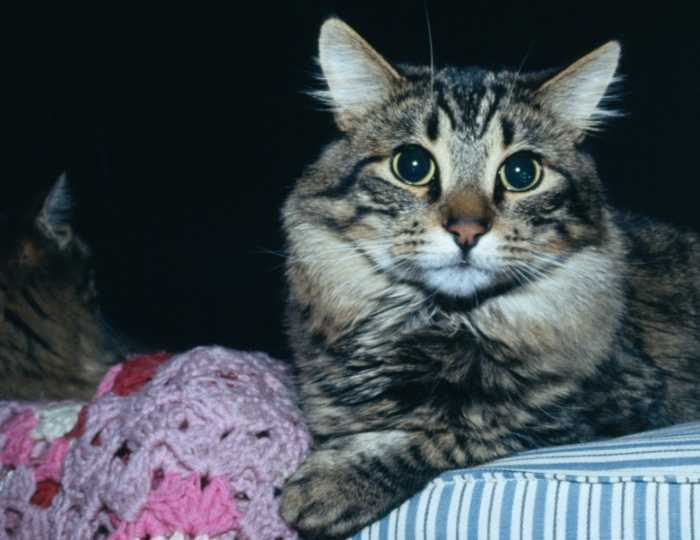 Cat Behavior
Why Does My Cat Lay On Me?
CatsCat BehaviorWhy Does My Cat Lay On Me?ByNaomi MillburnUpdated Jun 28, 2021Jupiterimages/Photos.com/Getty Images #p56d4d143e1b766907c07f1922c27a179, #p56d4d143e1b766907c07f1922c27a179 img { aspect-ratio: 3300/2550; height: auto; }When you're crazy about your cat, you often find yourself analyzing her every adorable feline action. If your furry buddy has a penchant for employing your body as a human couch and you wonder why your cat lays on you, don't get too offended or concerned. She's probably doing it because she loves your company, pure and simple.TipYou might notice your cat lying on your more when you're in a bathrobe or sweater. Take this into consideration when you're planning on spending a night on the couch watching TV with your pet.You're a cozy spotYou're a cozy spotCats are sweet, but they're also smart and savvy creatures. If your cat loves nothing more than being sprawled out on top of you, it's possibly because you feel cozy and more importantly, warm. Remember, cats love to sleep, especially as they get older and their metabolisms slow down from kitten-speed.Your cat adores youAleksandr Zubkov/Moment/GettyImages #p4e1fa9391b14b61db64f4bae59e82f99, #p4e1fa9391b14b61db64f4bae59e82f99 img { aspect-ratio: 5205/3341; height: auto; }Your cat adores youSome people erroneously think of all cats as being distant and detached creatures. Cat lovers, however, know this not to be reality. If your cat thinks that you're her bed, it could just mean that she loves being near you all of the time. You can see the proof in many other ways.If you live in a three-bedroom condo and your cat is usually in the same room you're presently occupying, she most likely simply adores you. This behavior is a common sign of bonding with you.Your cat trusts youYour cat trusts youBy feeling free enough to lounge on top of you, your cat also is expressing pure trust in you. Cats can be extremely anxious and jumpy creatures when they're not at ease, so by sleeping on you, your cat is showing you that she knows you're not going to do anything to harm her. She feels 100 percent relaxed when she's that close to you.The cat also regards you as a security blanket and knows you will protect her, increasing her desire to remain in physical contact with you in order to relax. Take that as the most genuine compliment in the animal kingdom.It's a display of powerIt's a display of powerYour cat reclining on you can also indicate a display of power. If your cat wants to make it known to you — and to the rest of the household — that she's got a lot of sway around these parts, she might just be inclined to show it physically. If the rest of your cats walk by and notice your kitty on you, they'll probably get the message. Don't take the power display the wrong way, however. Your pet wouldn't want to possess you if she didn't adore you first, after all.Other signs of loveStudio CJ/iStock/GettyImages #pb15ba5ad0911d71cebbac1f45164b1cf, #pb15ba5ad0911d71cebbac1f45164b1cf img { aspect-ratio: 7196/4803; height: auto; }Other signs of loveAs your cat is using your body as rental space, be attentive to any other signs that might point to a happy feline. If you hear the familiar rumble of purring, your cat's probably on cloud nine. Her eyes might even look partially open and partially closed. If she pushes her paws into your body, she's "kneading" and therefore likely in a serene and giddy mood. Blinking and yawning also both usually signify a pleased kitty cat.ReferencesThe Humane Society of the United States: Cat Chat – Understanding Feline LanguageGreat Pet Care: Why Does My Cat Sleep on Me?
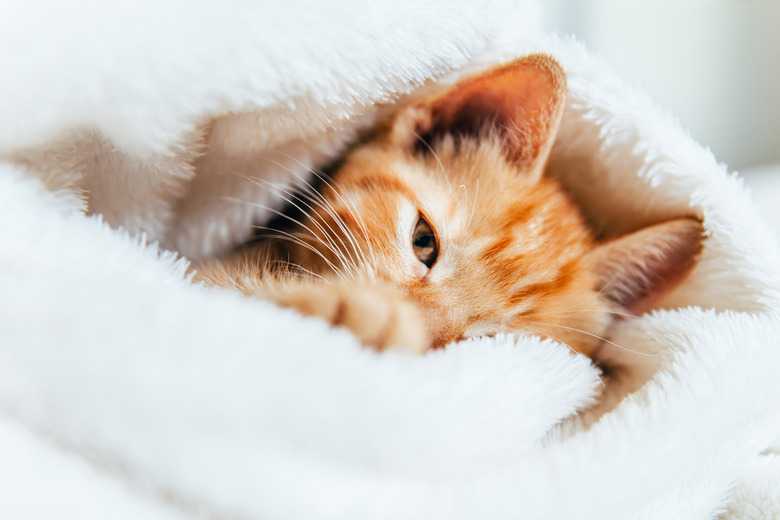 Cat Behavior
Suckling Behavior In A Cat
CatsCat BehaviorSuckling Behavior In A CatBySusan ParettsUpdated Aug 25, 2021If your adult cat suckles like a kitten on your clothing or even on your arm, don't be alarmed. Some cats will suckle on fabrics and people out of a need for comfort or as a show of affection. While cat suckling behavior is generally harmless, it can become annoying if it becomes compulsive and possibly dangerous if your cat ingests the fabrics she's sucking on.MKucova/iStock/Getty Images #eb45fc9908c0757d91606611e44e465ff, #eb45fc9908c0757d91606611e44e465ff img { display: block; aspect-ratio: 1.4996466431095Cat suckling behaviorsCat suckling behaviorsSuckling is an infantile behavior that usually makes an adult cat feel less anxious, just as it did when she was a baby. The behavior is akin to a grown human's thumb sucking. Your kitty will likely start by kneading a soft textile, then she'll lick, suck and chew on it. Some kitties don't do textiles; they suckle other cats and people—which can cause skin irritation in the suckled party.Suckling behavior may occur occasionally or compulsively. Cats who compulsively suckle have trouble stopping, even when you provide distractions with toys or treats. If your adult kitty has recently started suckling, take her to the vet to rule out a medical cause such as hyperthyroidism.Causes of cat sucklingManuta/iStock/GettyImages #pd86f65b5b2eba7f838bef6010d6255d8, #pd86f65b5b2eba7f838bef6010d6255d8 img { aspect-ratio: 5303/3540; height: auto; }Causes of cat sucklingThe most common cause of suckling in cats is early separation from their mothers and littermates. Kittens should stay with their mothers until they reach around 12 weeks of age—not eight weeks, a common separation age for puppies. If they are separated earlier than 12 weeks, they can develop compulsive behaviors, including suckling, later in life.Early weaning might cause cat suckling compulsion. A mother cat will begin weaning her kittens starting at around four weeks of age. The process usually takes about two weeks. If she abruptly stops letting them nurse before or during this time, they may continue to seek out the comfort of nursing from her on you or other items, even if they're eating solid foods. This could continue into adulthood if the behavior isn't discouraged.Discouraging cat sucklingDiscouraging cat sucklingIf your cat's suckling is compulsive, or if it has resulted in skin irritation or the ingestion of foreign objects, you'll need to discourage it. If your feline suckles you, gently get up and leave her alone. If your kitty suckles fabrics or pillows, take those items away or spray them with a taste deterrent. Another option is to distract her with a favorite toy or game when she starts suckling. You can feed your cat a series of treats when she's not suckling—if she responds to treats—and withhold them when she tries to suckle.Sometimes increasing the amount of fiber in your cat's diet may help discourage suckling on fabrics. Fiber helps to keep your kitty feeling full after meals and will discourage fabric ingestion inspired by hunger.Reducing stress for catsReducing stress for catsYour adult cat is most prone to exhibiting suckling behaviors if she's under stress; she suckles to cope with it. It's not the same as compulsive suckling, necessarily. If your kitty's suckling isn't interfering with her daily activities or yours, no harm will come from letting her indulge in this behavior occasionally.Use calming feline pheromone sprays to make her feel more at ease. Allow her access to a screened-in porch or give her some cat trees to climb so that she's physically and mentally stimulated during the day. Puzzle toys containing treats or kibble will engage her attention while you're gone. Spend plenty of time with her so she's not lonely and craving attention. Provide her with several hiding spots and high perches to escape to if guests visit or she gets annoyed at other pets.Avoid scolding your catAnita Kot/Moment/GettyImages #p8365a79d30ecbd36a2cb0afa15dc79e1, #p8365a79d30ecbd36a2cb0afa15dc79e1 img { aspect-ratio: 6000/4000; height: auto; }Avoid scolding your catDon't scold your kitty or otherwise punish her for suckling you or other objects. This will only serve to increase her anxiety and can cause her to fear you. Instead, prevent the behavior by removing objects she likes to suckle or using a deterrent spray. Once the behavior starts, ignore it or calmly redirect the behavior with play or treats.ReferencesPam Johnson-Bennett: Wool Sucking Behavior in CatsThe Animal Behavior Network: Cat Suckling and KneadingThe Cat Behavior Clinic: Cat Compulsive DisordersInternational Cat Care: Stress in Cats
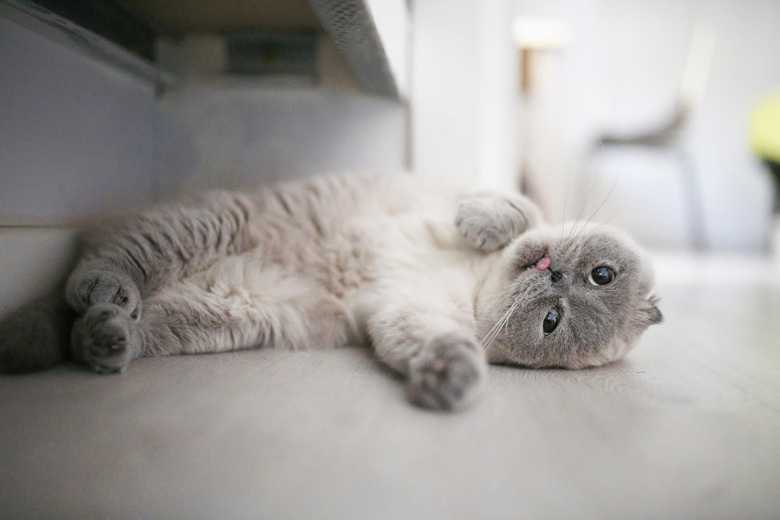 Cat Behavior
Why Does My Cat Run Around After Pooping?
CatsCat BehaviorWhy Does My Cat Run Around After Pooping?BySusan ParettsUpdated Jun 28, 2021Dogs notoriously have all sorts of weird rituals around pooping, but they're not alone in their weirdness. Cats, though they try to pretend they're the more dignified pet species, have their own set of pooping quirks. Chief among them is that some cats tend to go slightly nuts after pooping in their litter box.Many cat owners have probably noticed that their cat sprints out of the litter box after defecating. But why do cats run after pooping? As with so many animal behaviors, there's no concrete answer, but experts have several theories.NiseriN/iStock/GettyImages #e11cd039ab31ffa7c76d2dd798e34cb9c, #e11cd039ab31ffa7c76d2dd798e34cb9c img { display: block; aspect-ratio: 1.5Cat zoomies after poopingCat zoomies after poopingCat zoomies after pooping may occur because cats, like so many of us in the animal kingdom, simply feel good after pooping. Humans and cats both have a vagus nerve, which is stimulated by defecation. This can lead to a feeling of euphoria for your cat after pooping.More Like ThisCatsHow to Sleep With a Litter Box in Your BedroomCatsWhy Does My Cat Love My Dirty Clothes?CatsHow to Tell if a Cat is in PainCats may feel energized by the stimulation of this nerve, and may feel a desire to burn off that energy by taking part in one of their favorite activities: running around the house. It's their way of showing off how happy they feel.Cat runs after poopingCat runs after poopingBefore and after defecating, kittens typically get their rear ends licked clean by their mother. This is done to stimulate them to eliminate and to clean them up afterward. By running or jumping in the air after pooping, adult cats are celebrating or showing off their independence. Maybe they're proud that they can clean their bottoms on their own now!Why do cats run awayWhy do cats run awayCats may run away after pooping because they're trying to avoid predators. In the wild, cats generally bury their poop, most likely to mask their scent and throw predators off of their trail.Nils Jacobi/iStock/GettyImages #e1ca36ee7e809978a59d68622beeff321, #e1ca36ee7e809978a59d68622beeff321 img { display: block; aspect-ratio: 1.2500681013348By bolting away from the litter box after pooping, cats might be trying to increase their chances of survival by distancing themselves from their droppings as quickly as possible. This would make it harder for predators to find them.In multiple-cat households, less confident cats will bury their waste and then possibly sprint away to let other cats know that they aren't a threat. Monitor the cats in your household to ensure that one cat isn't bullying the other while she's in the litterbox and possibly chasing her off after she uses it. This could cause problems like inappropriate elimination if not dealt with by adding an additional litter box to the household.Cats run to stay cleanCats run to stay cleanAnother explanation for cat zoomies after pooping is that cats are clean creatures, and they simply want to rid themselves of excess litter or fecal matter. Jumping and running right after being in the litter box would help to shake off anything sticking to their feet or any other parts of them, so it may be that it just helps your cat feel extra clean.Sprinting away from the litter box quickly separates your cat from their smelly feces, which they want to get away from. After all, cats are fastidiously clean animals who never sleep or eat near their feces.Cat pooping painNico De Pasquale Photography/Moment/GettyImages #p40794133fdcaf1f0499cbcc5bffebcda, #p40794133fdcaf1f0499cbcc5bffebcda img { aspect-ratio: 7952/5304; height: auto; }Cat pooping painIf you notice that your cat runs away from the litter box and cries after eliminating, then they could be having a medical problem. This is especially true if you've never noticed this type of behavior before.For cats who experience pain during elimination, they may run away from the box and avoid it afterward due to associating the box with the discomfort. To solve these types of litter box issues, visit your veterinarian to rule out a medical cause of your cat's unusual behavior.ReferencesWoman's World: Why Do Cats Act Crazy After Going #2?The Mercury News: Why Does My Cat Race Around the House After Using the Litter Box?Napa Humane: Orphaned Kitten CarePAWS: Solving Litter Box ProblemsMSN: Why Do Cats Bury Their Poop?The Daily Telegraph: Crazy Cat Antics After Kitty Does a No. 2 is Called 'Poo-Phoria' and Here's Why
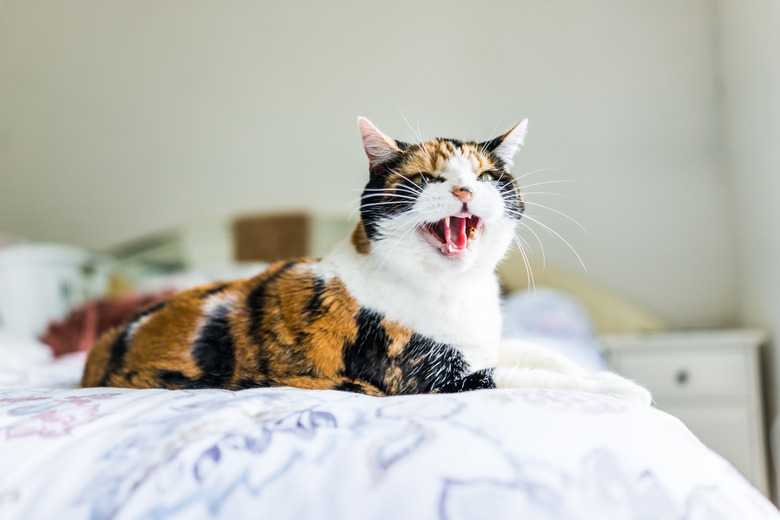 Cat Behavior
Why Is My Cat Hissing And Growling For No Reason?
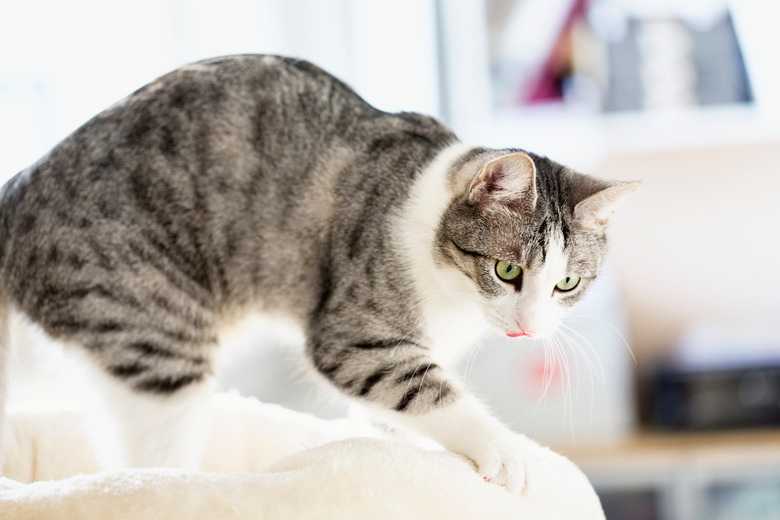
CatsCat BehaviorWhy Is My Cat Hissing And Growling For No Reason?ByVanessa SalviaUpdated Aug 12, 2019krblokhin/iStock/GettyImages #pc8e81478d87aa3f2d8d7da71edd47588, #pc8e81478d87aa3f2d8d7da71edd47588 img { aspect-ratio: 6000/4000; height: auto; }Cats are creatures of mystery, which is part of their appeal. One moment they're kneading you or rubbing their face against you, and the next they're ignoring you. They might go from purring one second to suddenly sitting in a corner.Cats have different senses than humans do, so when you see your cat hissing at thin air, it might not mean that she's seen a ghost. She might be looking at something or hearing something that you can't see with your limited, mortal senses.Why do cats growl?Why do cats growl?Growling and hissing are both very common ways that cats communicate. A cat growling and hissing is usually a cat who's scared. The Humane Society says that cats have a wide variety of vocalizations that they use for communicating, both with other cats and with humans. A cat who is growling, hissing, or spitting is a clear sign that the cat is agitated, frightened, or angry about something.The problem is that when a cat is growling, it's not always obvious to us why they're growling. Even when a cat seems to be simply staring at a wall there are things that they can sense that humans cannot. Cats have keen eyesight since they evolved to be hunters. For example, your cat may notice the movement of a dust particle, or something else that is interesting to him that just happens to be on a very small scale.When your cat growls and hisses, he's effectively saying, "Back off now, or else." Usually, a growl is just a warning and he won't actually attack. Growling is often accompanied by hissing along with possibly arching his back. The point is to make himself sound and look fierce enough that whatever is bothering him backs off.Cat hissing at thin airCat hissing at thin airCats can hear much better than we can. Hartz says that on the low range of hearing, cats and humans are about the same in what we both can hear. The high end of the hearing range in humans, however, reaches its limit much sooner than cats' hearing reaches its limit. This means that cats can hear things of a much higher pitch than humans can.In fact, the range of what cats can hear is even higher than that of dogs! In another anatomical difference, cats can swivel their ears in all directions, which helps them pinpoint the source of sounds with much more accuracy than we can. Even if you can't tell where a sound is coming from, or even hear the sound, your cat will be able to pinpoint it precisely.A cat hissing at thin air could be hearing something in the house that you can't see or hear. There may be an animal outside that she can hear or smell. If there are loud children in the house, your cat growling may be a sign that she is agitated and scared. Visitors to your home can easily bring on a growl, a hiss, or both, particularly if they forget their manners and approach your cat suddenly.Why is my kitten growling?Why is my kitten growling?Sometimes a kitten growling is simply a biological impulse. Mother cats will hiss and growl to warn others away from their kittens. The kittens are learning from their mother, so they may hiss and growl just to emulate her. Older cats may growl to protect a toy or food.Bottom line, cat growling is a natural way that cats communicate. But, if your cat is consistently growling and hissing at something you can't see, it might be a good idea to get him checked out by a veterinarian. If there's some external factor that may be agitating your cat, such as a next-door dog that is barking, perhaps try to comfort your cat or allow him to control his environment by giving him safe, quiet places to hang out.ReferencesThe Humane Society: Understanding Feline LanguageHartz: How Your Feline Uses His Senses
 Cat Behavior
What Does It Mean When A Cat Sits On You?
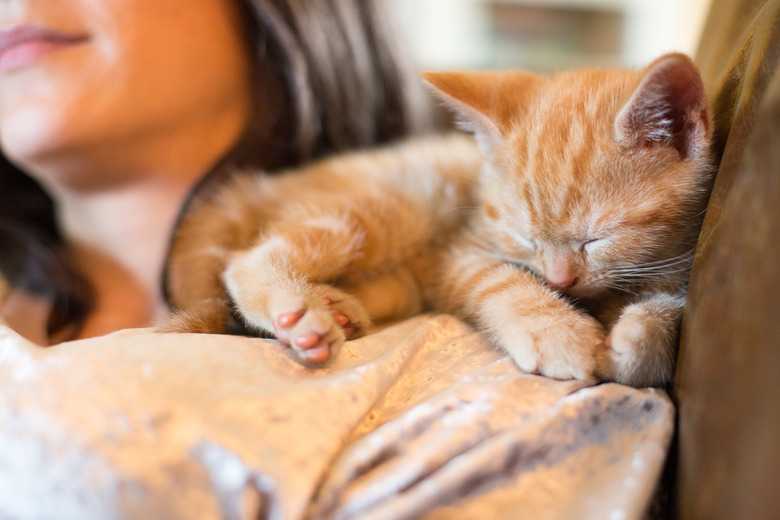
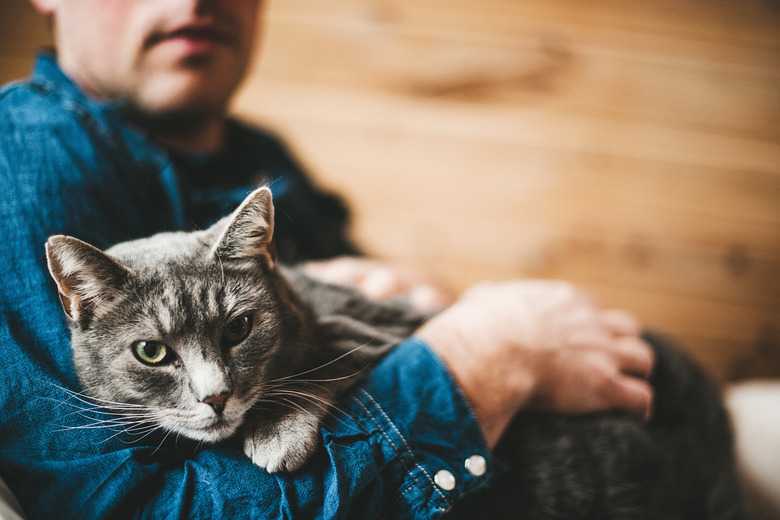
CatsCat BehaviorWhat Does It Mean When A Cat Sits On You?ByKayleigh RobertsMay 23, 2019 4:07 pm ESTCats are known for a lot of things, but chief among them are their DGAF attitudes and their lazy, lazy love of sitting. Combined, these qualities have led many a cat to plop down on their owners over the years, but what does itmeanwhen a cat decides to sit on you? Here's everything you need to know about what cats are trying to tell us when they sit on a human.They feel safeNeil Petersen / EyeEm/EyeEm/GettyImages #pc719affaa4da7c2d74a944fcd5e00081, #pc719affaa4da7c2d74a944fcd5e00081 img { aspect-ratio: 5760/3840; height: auto; }They feel safeMore Like ThisCatsHow Do Cats Choose Their Favorite Person?DogsHow to Know When Your Pet Loves YouCatsWhy Do Cats Like to Sleep on Top of You?One thing cats are trying to say when they sit on you is a simple, "Hey, I feel very safe with you." This can be especially true if your kitty is laying on you when he's ready to take a nap—it means that your feline friend trusts you to keep him safe from predators while he's sleeping.Showing trustShowing trustSpeaking of trust, it's not just nap cuddles that show trust. Any time a cat decides to lay on you, it's a big sign of the trust you've developed.npdesignde/iStock/GettyImages #e95e16ee242f18eaedbfc3178dd4bded3, #e95e16ee242f18eaedbfc3178dd4bded3 img { display: block; aspect-ratio: 1.5"They really do have to trust you to sit on your lap," Marilyn Krieger, Certified Cat Behavior Consultant (CCBC), based in Redwood City, California, and author ofNaughty No More!,says. She stresses the importance of not making a cat sit on your lap and giving the cat the option to leave. "When you give them that choice of sitting on your lap or not and leaving when they want to, they become more trusting of you."You're one of their favorite peopleYou're one of their favorite peopleYes, cats play favorites and yes, they're more likely to lay down to rest on the person they like most in any given room.Elitsa Deykova/E+/GettyImages #e3386d768df687c268867bed79f60c3f3, #e3386d768df687c268867bed79f60c3f3 img { display: block; aspect-ratio: 1.5"There are a number of ways including head-butting, purring and sitting on laps. Proximity also can demonstrate favoritism. Some cats follow their people around the home or always choose to be near them," Marilyn told Cuteness.They want you to pay attention to themThey want you to pay attention to themCats will also lay on a person when they're craving attention. It's important not to overestimate cats' independence and to remember that even these aloof creatures crave affection from time to time.Hannah Mentz/Corbis/GettyImages #e0122fd85b9e627c1c3665986073cf470, #e0122fd85b9e627c1c3665986073cf470 img { display: block; aspect-ratio: 1.5As we've written before, "Cats can get lonely when you're not at home and most will seek out attention when you're around. While cats are undisputedly independent and may be aloof to some people or strangers, feline standoffishness is overestimated."They're stealing your body heatDaniloAndjus/E+/GettyImages #pf86af40898d9ee985ff7524a5c1f21e3, #pf86af40898d9ee985ff7524a5c1f21e3 img { aspect-ratio: 6016/4016; height: auto; }They're stealing your body heatCats love to lay around in warm places and the human body is pretty warm. According to Marilyn Krieger, cats sometimes lay on their owners because they're craving that warmth.They love the way you sound and smellIvanJekic/E+/GettyImages #p7cc3f95d7f05b9d51b9d072dd829a4db, #p7cc3f95d7f05b9d51b9d072dd829a4db img { aspect-ratio: 4829/3548; height: auto; }They love the way you sound and smellCats love to sleep and, it turns out, the sounds that the human body makes naturally (like the rhythm of the heart beating and the sound of our breath) can be really soothing and sleep-inducing for cats. So, yeah, your cat might be using you as nature's noise machine when she snuggles up to you. On a more personal note, however, your smell is unique to you and might put your cat in that safe, trusting mindset we discussed above, which is totally unique to your relationship.
 Cat Behavior
Why Do Cats Knead?
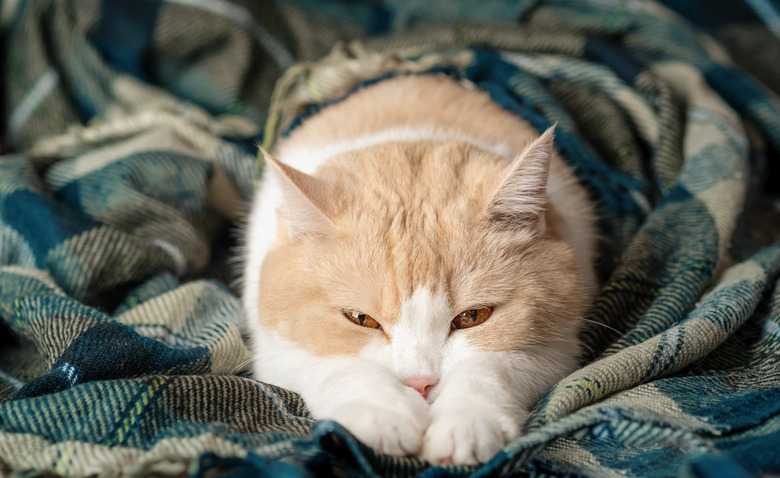
CatsCat BehaviorWhy Do Cats Knead?ByJennifer Kelly GeddesUpdated Apr 14, 2022Why cats knead may be a head-scratcher to some pet owners, but seasoned cat lovers know an age-old motion when they see one. This instinctive activity dates back to birth for this fluffy animal, and cat kneading continues to be important as your kitten becomes an adult.#e270683ba6e5315fffe1c0ac588b4f729, #e270683ba6e5315fffe1c0ac588b4f729 img { display: block; aspect-ratio: 1.5Cats making biscuits isn't really what's going on when a cat presses down on a soft surface (or your thigh!). As you learn about cat kneading and why it happens, it's also a good idea to pick up on a few ways to curb the habit too if only to protect your couch upholstery and your own skin. The best ways to ease the kneading at home is with consistent redirection along with praise, treats, and fun toys to distract.Why do cats knead?Why do cats knead?Why cats knead isn't known for sure, but there are several theories related to how a cat grows and develops and makes herself comfortable. If you spy a cat kneading, it could be due to the following:More Like ThisCatsWhy Do Cats Knead Blankets?Cats5 Interesting Things to Know About a Cat KneadingCatsSofas That Cats Can't RuinShe's remembering her nursing days: One kneading theory has to do with kittens pressing down on their mother while they suckled. If your cat kneads, she could be recalling her youth.She's showing love: Cats often knead to show their owners kindness and affection.She's trying to relax: Cats do feel stress sometimes, and kneading can be calming.She's creating a nest: Pawing and pressing on the ground or carpet could be a cat's way of making a cozy nest for her nap, much like dogs circle (and circle) before they settle down.She's marking her spot: Kneading could also be a way of claiming certain territory, as cat paws contain scent glands.What happens when cats knead?SilviaJansen/iStock/GettyImages #p48794c6b4c8693d237a8cc5c61d1a849, #p48794c6b4c8693d237a8cc5c61d1a849 img { aspect-ratio: 5760/3840; height: auto; }What happens when cats knead?When a cat is getting ready to knead, he may arch his back slightly as he bears down with both paws on a soft surface, such as the bedspread, sofa cushion, or his own bed. Your cat may even leap into your lap and knead your legs, which can be painful since his claws are out when he does it. Cat kneading is a happy action, but it's not a silent one; you can expect to hear some purring as he works his paws up and down. The kneading action is soothing and relaxing to cats, causing some to conk out for a short snooze during the process, which is super sweet to see.How to stop cat kneadingHow to stop cat kneadingCat kneading can be a bit destructive since your kitty's claws are pressing into fabric and other soft material, resulting in loose threads, holes, and tears. Kneading could also bother a pet dog in the house or the kids if they're trying to hold the cat. While you shouldn't scold your kitty when she's kneading, you can work to curb the activity and encourage it in other areas.One way to limit the destruction that a cat's kneading can do is to keep her nails trimmed short. You might also check out special sprays on the market to focus your kitty's efforts away from your settee and to her own blanket.SilviaJansen/iStock/GettyImages #e677410db772e56f6e68a9a497a19edb5, #e677410db772e56f6e68a9a497a19edb5 img { display: block; aspect-ratio: 1.4998574280011Consider a special pad made just for kneading that you can keep nearby when your cat is poised to begin. If she starts to knead in the wrong spot, gently remove her and offer a toy or treat by way of distraction. Whatever you do, don't punish your cat for kneading. This tendency is a natural feline habit that your pet can't help. Instead, keep redirecting her and rewarding her with tasty treats and toys.ReferencesThe Humane Society of the United States: The Cat's MeowNebraska Humane Society: Is My Cat Happy?
 Cat Behavior
Why Does My Cat Suck On Blankets?
CatsCat BehaviorWhy Does My Cat Suck On Blankets?ByRachel HastingsUpdated Jun 28, 2021It's no secret that cats exhibit many strange behaviors. From rubbing their heads against anything and everything, to kneading, to sitting on you, numerous cat behaviors can cause a cat owner to wonder why their cat is doing what they're doing. A cat or kitten suckling on blanket, or wool sucking, is one such behavior.Osobystist/iStock/GettyImages #e325cd601d3d86419c402c2e9e57d478e, #e325cd601d3d86419c402c2e9e57d478e img { display: block; aspect-ratio: 1.5What is wool sucking?What is wool sucking?Wool sucking occurs when your cat sucks on a blanket or other fabric items, such as a sweater, bathmat, or carpet. Any cat can exhibit wool sucking, but it is most common in Burmese cats, Siamese cats, and Oriental mixed breeds. It is also more prevalent in young cats, specifically those under one year of age.More Like ThisCatsSuckling Behavior in a CatCatsWhy Do Cats Knead Blankets?CatsWhy Doesn't My Cat Like Blankets?Why cats suck on blanketsWhy cats suck on blanketsWhy do cats suck on blankets? One reason cats may suck on blankets is that they were weaned too early as kittens. When a kitten is separated from its mother too soon, you may see the cat nursing on a blanket later to replicate the feeling of nursing. This can be prevented by allowing kittens to stay with their mothers until they're at least 12 weeks old. Even though cats are able to eat solid food at around 6 weeks of age, they may not be physically or emotionally ready to be separated from their mothers or littermates just yet.Another potential cause of a cat suckling a blanket is stress. According to cat behavior expert Pam Johnson-Bennett, a sudden change in the cat's environment, such as a move to a new home or the arrival of a new baby, may cause stress that can lead to wool sucking. Separation anxiety is another stressor that might lead your cat to turn to wool sucking as a coping mechanism.Dietary deficiencies or other underlying medical conditions can also increase the likelihood that your cat will exhibit wool sucking.How to discourage wool suckingMariia Kokorina/iStock/GettyImages #p8133c38107db98617a095d201fefccad, #p8133c38107db98617a095d201fefccad img { aspect-ratio: 6240/3824; height: auto; }How to discourage wool suckingOne way to discourage your cat from sucking on blankets or other wool items is to make these items less accessible. Placing the objects out of reach will prevent your cat from being able to suck on them. Also, if the kitten blanket is in a specific room, such as the bedroom, you can limit your cat's access to the room in question.Another way to decrease your cat's urge to suck on blankets is to make sure they're getting enough playtime. Playing with your cat regularly can distract them from their urge to suck on wool objects while simultaneously relieving stress. You can even initiate playtime when you notice your cat is about to start sucking to divert their focus away from the behavior.You can also take measures to ensure that your cat is adequately stimulated when you're not at home. Consider getting your cat a food-dispensing toy, or rotating your cat's toys every 1 to 3 days to increase usage. Other ways to boost environmental stimulation include providing a cat tree or scratching post so that your cat can displace anxiety through climbing or scratching.When to call the vetWhen to call the vetIn some cats, wool sucking is just occasional. As long as it's only happening every once in a while and the cat isn't chewing or ingesting the material, it's okay to allow them to continue sucking.Linda Raymond/Moment/GettyImages #e614e55462d3ad3a402d5941f458c031a, #e614e55462d3ad3a402d5941f458c031a img { display: block; aspect-ratio: 1.4998615342011However, if the behavior is compulsive and the above measures aren't discouraging the behavior, it may be worth consulting with a veterinarian or cat behavior expert. It's also good to make sure the behavior isn't a symptom of an underlying medical cause.There may be adjustments you can make to your cat's diet as well. Increasing the amount of fiber in their diet can cause them to feel fuller and may help reduce their urge to suck on or ingest fabrics. Discuss these changes with your veterinarian.ReferencesWool Sucking Behavior in CatsCat Behavior Problems – Chewing and Sucking
 Cat Behavior
Are Cats Nocturnal?
CatsCat BehaviorAre Cats Nocturnal?ByCuteness TeamUpdated Feb 6, 2019knape/E+/GettyImages #pe42a389782bcc0dddd58ad5905c57d5f, #pe42a389782bcc0dddd58ad5905c57d5f img { aspect-ratio: 6048/4032; height: auto; }Diurnal, nocturnal, or crepuscular. Which one of these terms best describes your cat? Diurnal animals are active mostly during the daylight hours. Nocturnal animals are active in the evening hours and like to sleep during the day, while crepuscular critters favor their activities at or around dawn and dusk.Big cats, small catsBig cats, small catsIn the wild, big cats are mostly nocturnal hunters. Their eyes (much like that of the domesticated cat) are designed for sight in low and high light levels. If your domestic cat displays nocturnal behavior, it's acting like a big cat (lion, tiger, etc.) Usually, these cats sleep anywhere from hours a day to more than sixteen a day. That's a lot of sleeping! The good news is this behavior can be modified in most cats (but alas, not in all.)More Like ThisCatsWhy Do Cats Love You Most in the Morning?CatsWhy Does My Cat Like to Cuddle After Eating?CatsWhy Your Cat Runs Around Like A Maniac At NightCool crepuscular catsCool crepuscular catsCats combining daylight activity with nighttime activity are commonly known as crepuscular. The common house cat, most likely because of a higher rate of human interaction, is not nocturnal but crepuscular.Crepuscular cats lounge around, enjoy dream-filled naps, and lay low around midday to avoid the heat and keep cool. They then become more active in the early morning and early evening hours.Crepuscular critters differ from diurnal and nocturnal. Nocturnal animals peak during the night while diurnal animals peak during the day. Some cats commonly described as nocturnal are crepuscular.It's interesting to note here that moonlit nights and dreary, cloudy days can entice the crepuscular cat into action, so daytime activity is not totally ruled out of the crepuscular cat's agenda!Nocturnal feral catsNocturnal feral catsFeral cats appear to be nocturnal for the most part, according to Southern Methodist University. A "feral" cat is a stray or offspring of a stray that has returned to a partially wild state. These cats survive in colonies usually around a food source such as a restaurant dumpster, a trash can or an abandoned building. Feral cats usually depend on some human contact to attain their food and rarely live only by hunting prey alone.More diurnal managed catsMore diurnal managed catsEvery cat, whether it's a household cat, a stray or an alley cat, can change their activity level at will and can become less nocturnal or more diurnal in response to their level of interaction with their environment or activities with humans."My cat keeps me awake at night," is a common complaint of cat owners. Nocturnal behavior in cats can be annoying for their human owners, but sometimes this behavior can be managed, so the cat adjusts to the human lifestyle and becomes more diurnal, says the Animal Humane Society. If your cat displays nocturnal behavior, what must be done is a slight shifting of their schedule as well as management of their environment.Tips that may helpTips that may helpDon't payoff disturbing behavior, warns PAWS. If you give your cat what it wants, you're reinforcing this nightlife behavior and verifying, "Hey, this works!"Early evening exercise may provide enough activity to tire out your cat and have him (or her) sleep through the night. Devoted activity may allow you that sleep you so desperately need at night!While you're away during daytime hours, provide some type of activity for your cat for mental and physical stimulation. A food type toy such as a 'Roll-a-Treat' is a great distraction. A catnip toy like the 'KONG Squirrel Catnip Toy' is another good method of keeping your cat awake during the day. Consider feeding your cat with an automatic food dispenser toy. This will keep your cat on its feet and not sleeping all day. Feeding times are important. Consider feeding your cat a few times throughout the day (one being at night, before bedtime.)Never punish or strike your cat. Your cat's behavior is not caused by any human emotion. Punishing your cat will cause a stressful relationship between you and will not ultimately solve the problem.Managing your cat's nocturnal behavior by following the above guidelines may keep you both 'in-sync' for years to come. Unfortunately, not every cat will respond in the same manner. Situations differ just like each cat is different!ReferencesAnimal Humane Society: Cat Keeping You Awake? How to Manage Night ActivityPAWS: Nocturnal Cats – Dealing with Nighttime TroublemakersSouthern Methodist University: Feral Cats in Your Neighborhood?
 Cat Behavior
Why Does My Cat Bite Me When I Stop Petting Her?
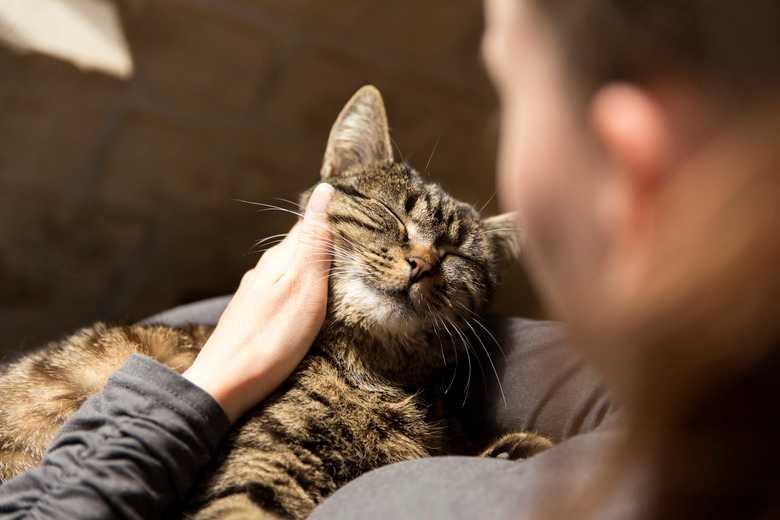
CatsCat BehaviorWhy Does My Cat Bite Me When I Stop Petting Her?BySarah Jeanne TerryDec 28, 2020 12:02 pm ESTIt's a chilly winter day and your adorable kitty is cuddling in your lap. As you pet them, they purr. Then, you get a text on your phone and take a minute to look, interrupting the petting. Just as you're about to respond—ouch! Your kitty bites you. Why would your cat interrupt a perfect Caturday, teeth first?Bogdan Kurylo/iStock/GettyImages #eb2396f6713018fa35675f9caaf887647, #eb2396f6713018fa35675f9caaf887647 img { display: block; aspect-ratio: 1.4976958525346If your cat tends to bite you as soon as you stop petting, then you'll be happy to know that this is actually a common behavior in cats. Biting is one of the ways that cats communicate with their humans. They're smart and savvy, but cats can't speak human language, so they try to say things in their own. What exactly is your cat trying to say to you with their teeth? There are a few possibilities.Your cat might think that it's returning your affectionWestend61/Westend61/GettyImages #p48f7b41a3986d685143b25e8ff890c13, #p48f7b41a3986d685143b25e8ff890c13 img { aspect-ratio: 5472/3648; height: auto; }Your cat might think that it's returning your affectionMore Like ThisCatsWhy Do Cats Groom Themselves After You Pet Them?CatsWhat Does It Mean When a Cat Lies on Its Back?CatsDoes My Cat Know That I Love Them?Cat owners know that when you're petting your cat, you're showing them how much you love them. However, your cat can't pet back. Instead, they occasionally bite. Kittens learn about biting when they're young, according to Animal Planet. They bite one another as a part of play or affection. They see their humans as part of their family, basically just bigger cats. Thus, they're probably just trying to show you they love you the same way they would the rest of their family.Your cat might be telling you that it doesn't want you to stopLinda Raymond/iStock/GettyImages #pa3a29a97d2a687aafe99625affdb0c3c, #pa3a29a97d2a687aafe99625affdb0c3c img { aspect-ratio: 5573/3715; height: auto; }Your cat might be telling you that it doesn't want you to stopAnother possible reason your cat bites when the petting sessions stop is because they didn't want it to stop! They're trying to tell you to keep it going! Deborah S. Greco, DVM, a veterinarian and the senior research scientist for Nestle Purina Petcare, explained to Reader's Digest that your cat might also bite to tell you that they need something. If your cat was enjoying their cuddle time, then they might be annoyed when it stopped. A little love bite might be their most efficient way of telling you they want a good thing to continue.Your cat might be telling you that they're overstimulatedcyano66/iStock/GettyImages #p996c5c7add43262c39e132b5216d43dd, #p996c5c7add43262c39e132b5216d43dd img { aspect-ratio: 4600/3070; height: auto; }Your cat might be telling you that they're overstimulatedCats definitely enjoy petting and cuddle time, but the physical affection can quickly turn into something that feels overwhelming for your cat. It's possible that, while you were petting your cat, they had already become overstimulated. According to the Humane Society of Huron Valley in Ann Arbor, Michigan, cats can become overstimulated at a certain petting threshold, and they'll likely want you to stop right away. According to the VCA Animal Hospital, the bite tells you to stop—biting is one of the primary ways they know to tell us that.How to stop your cat from biting youNoelia González/Moment/GettyImages #pd2c113dffdae85b6c3f422a1a8cf73f6, #pd2c113dffdae85b6c3f422a1a8cf73f6 img { aspect-ratio: 5378/3589; height: auto; }How to stop your cat from biting youEven though your cat biting you is a normal kitty behavior, that doesn't always mean you want it to continue. Most cats, when they bite their humans, don't bite so hard that it hurts. However, if your cat never learned how much biting is too much, then you might want to find a way to adjust their behavior.The best way to stop your cat from biting you is to catch signs of your kitty's overstimulation before it results in biting. Usually, your cat will give off other body language that tells you they're about to bite. According to the Humane Society of Huron, some of the warning signs that biting is imminent include ears going back, tail flicking, a low growl, a stiffened body, or unsheathed claws. Make sure not to punish or physically correct your cat if they bite, because that might only make the problem worse.Pavlina Popovska/iStock/GettyImages #e1df39628fdfc202b2b0329c8cd752f03, #e1df39628fdfc202b2b0329c8cd752f03 img { display: block; aspect-ratio: 1.509911558402In conclusionIn conclusionWhen you're petting your cat and they bite you, they're trying to tell you something. They may want you to pet more, or they may want you to stop. They may even just be trying to "pet" you back. The key is to pay attention to the other elements of your cat's behavior to figure out what exactly they're trying to say. Since you don't speak the same language, you have to learn to read each other's signals. But the more humans and cats connect, the happier both are going to be.ReferencesHow to Stop a Cat From BitingWhy Does My Cat Bite Me?PETTING-INDUCED OR OVERSTIMULATION AGGRESSION IN CATSCat Behavior Problems – Aggression – Petting Aggression
 Cat Behavior
How To Lure A Cat Out Of Hiding
CatsCat BehaviorHow To Lure A Cat Out Of HidingByBarbara RubenUpdated Aug 17, 2020Selcuk1/iStock/GettyImages #p639e1bd9a8cc8815aeabdda45ba7f044, #p639e1bd9a8cc8815aeabdda45ba7f044 img { aspect-ratio: 5760/3840; height: auto; }Cats are masters of concealment, so you can expect them to hide themselves when they are frightened, stressed, or in pain. Drawing a cat from his hiding place can be as simple as placing some tantalizing food nearby, but it's not always that easy. If you are having trouble locating your kitty or if he refuses to budge from his shelter, you may have to resort to a more creative or long-term strategy.Finding cats outsideFinding cats outsideIf you think your inside cat has escaped to the great outdoors, act quickly. In the majority of cases, an escaped cat finds a hiding place very close to home. Check under the deck, in the bushes, and other areas that your cat has easy access to.Microwave a plate of canned tuna or wet food and leave it outside for a while. Your cat's hunger likely will overcome her fear of the outdoors when her stomach is empty. Familiar smells also can help your kitty find her way back if she's disoriented. Place her litter box, bed, or an article of your clothing outside to help her find home.You can set humane cat traps as a last resort, although you shouldn't leave them out overnight unattended. Consider leaving a little bit of dry food and water outside in case he comes back overnight.Common mistakes to avoidCommon mistakes to avoidShy cats are sensitive to loud noise and sudden movements, explains the Humane Society. Raising your arm too fast can send him cowering back under the furniture in a flash. When attempting to lure your cat out, move your body slowly and quietly. Kneel or sit on the floor as you call or reach out to him.Consider using a toy to catch her attention and encourage her to chase it out of her hiding spot instead of reaching in to pull her out. Shut the door and ask your family to avoid the room to keep the environment calm and controlled, says Catster Magazine.Drawing out shy catsDrawing out shy catsSome cats are more confident or sociable than others. Be patient and persistent to get good results. Use toys, catnip, and treats or wet food to encourage your cat to come out from under the couch, bed, or basement rafters. Place these lures near his hiding place, but make sure he has to come out a bit to reach them.Shake the bag of treats every time you give her some to condition your cat to respond to the sound. This can give you an easy way to "call" your cat when needed.Acclimating new catsAcclimating new catsNewly adopted cats are generally skittish and fearful as they adjust to new owners and a completely alien environment, says veterinarian Dr. Marty Becker. It's common for kitties to take a few days or weeks to adjust to their new home.Give new pets, especially those adopted as adults, some space and time. Place them in a private room where they are separated from other pets, and set up a convenient hiding place for them to use. Leave food, water, and litter in the immediate vicinity and allow the cat to use them at his leisure.Give him a chance to grow accustomed to your appearance and smell before introducing your other pets. Spend time with him every day, even if you just sit with him while he eats.ReferencesIs Your Cat Hiding? Here's Why — And What to DoHow to Help a Frightened CatWhat to Do if Your New Cat Won't Come Out of Hiding
 Cat Behavior
How To Get Your Cat To Sleep With You
CatsCat BehaviorHow To Get Your Cat To Sleep With YouByBarbara Bean-MellingerUpdated Aug 31, 2021Cats are not shy about playing favorites, and they tend to sleep with their favorite person. Since they're always interested in a meal or snack, their favorite person is usually the one who feeds them, cares for them, and makes time to play with them. If your cat isn't cuddling up next to you at bedtime, there are changes you can make to get your cat to sleep with you.netjens/iStock/Getty Images #e8d8a44d8dfd772f1a2a91cd3c08c1915, #e8d8a44d8dfd772f1a2a91cd3c08c1915 img { display: block; aspect-ratio: 1.4996466431095A cat's favorite personA cat's favorite personIf you are not your cat's favorite, step up your interaction with him. Make time to sit with him on your lap and pet him — not just for a few minutes but for prolonged periods of time every day. Talk to him and play with him if he likes to play. Buy or make new toys, like a large button attached to a string, a simple ball of yarn, or rolled-up paper, and roll or drag it past him or back and forth to get him to pounce on it and play. Give him healthy treats now and then; just be sure to account for the treats' calories in his diet.Cats like warmth when they sleep, so make a cozy spot on your bed into which she can burrow, like a pile of blankets or what looks like clean clothes. Avoid leading her to it; let her think she found it herself. If that works for a few nights but she then sleeps elsewhere, move the cozy pile and change out the blankets or pillows.Give them an escape routeValiantsina Halushka/iStock/GettyImages #pddf31c35cde79bc6a21d5aaff5e45f99, #pddf31c35cde79bc6a21d5aaff5e45f99 img { aspect-ratio: 4000/2649; height: auto; }Give them an escape routeCats like to sleep where they feel safe, which is one reason they choose their favorite person: They trust and feel safe with that person. If he does decide to cuddle up on your bed with you, keep yourself from snuggling him too tightly or wrapping your arm around him, which he may find stifling. Let him know he is free to go any time by leaving the door open enough for him to slink out.Don't expect company every nightDon't expect company every nightJust when you think you've become the favorite and your cat has slept with you not once but several times, you will find her spot cold the next night. Don't be alarmed. Even if your cat accepts your invitation and sleeps with you several nights in a row, be prepared to be without her some nights too. Cats like to change up their sleeping spots to remind you who calls the shots. They are also daytime nappers who get up and wander in the night, so it's rare that she will sleep with you the whole night through.Know the pros and consKnow the pros and consIf you are allergic to cats, sleeping with them is not a good idea. While allergists would prefer you not have a cat at all, if you do have one, they recommend closing your bedroom door so the cat doesn't come in. For nonallergic cat owners who like the idea of sleeping together, many end up finding it less than ideal. Some say cuddling up to their favorite purring machine helps them fall asleep quicker than when they sleep alone. Staying asleep, however, is another matter.Most cats do the majority of their sleeping during daytime naps, so by nighttime, they have a burst of energy. They may think it's playtime and want you to join in. If their gentle pats on your face don't rouse you from your slumber, their constant coming and going along with jumping on and off the bed can cause you to have disrupted, restless sleep.malyshkamju/iStock/GettyImages #eba02ee9ee5cd6859b860240749afc17d, #eba02ee9ee5cd6859b860240749afc17d img { display: block; aspect-ratio: 1.5Understand too that while sleeping with your cat, you're also sleeping with any fleas or intestinal parasites he may be carrying. While fleas don't infest humans, they can bite you and leave welts. Some viruses can be transferred from cats to humans and vice versa. On the other hand, petting and cuddling your cat after a stressful day releases hormones that reduce anxiety and lower your heart rate, so sleeping with your cat can be good for your health.ReferencesUnion Lake Veterinary Hospital & Pet Services: How Cats Choose Who to Sleep WithFeline Rescue: Should You Allow Your Cat to Sleep in Your BedReader's Digest: Is It OK to Let Your Cat Sleep in Your Bed?
 Cat Behavior
How To Know When A Kitten Needs To Pee
CatsCat BehaviorHow To Know When A Kitten Needs To PeeByLisa McQuerreyUpdated Aug 30, 2020Prystai/iStock/GettyImages #p1bcd79653dfaf623c5dbd0724f0739ca, #p1bcd79653dfaf623c5dbd0724f0739ca img { aspect-ratio: 4556/3037; height: auto; }Litter box training a kitten requires a different approach than housebreaking a dog, who can be taught to signal you when he needs to go outside. There are some overlaps, however, in terms of determining when the kitten needs to go. Getting your kitty accustomed to a litter box from the first day you bring her home will help ensure a clean, pee-free environment for everyone.Create a Kitty BathroomCreate a Kitty BathroomSet up a litter box in a low-traffic area of your home that's easy for your kitten to find and access. Ideally, a bathroom, laundry, or utility room is a good choice because accidents are relatively easy to clean up in these locations. You can also close your kitty into these small rooms with her litter box to get her accustomed to using her bathroom. Purchase a litter box that is easy for your kitten to climb into, and avoid covered boxes, at least initially, as some cats shy away from them.Post-eating potty timePost-eating potty timeAfter your kitten consumes food or water, she'll have to poop and pee within about 10 minutes. After feeding, take her directly to her litter box area and leave her alone. Cats like to go to the bathroom in private, and they naturally are attracted to areas where they can bury their leavings.When your kitten successfully goes potty, show her praise and attention. Keep the litter box clean, but initially, leave a little of the pee behind so she'll recognize her scent and remember where she has to go to the bathroom.Kneading to peeKneading to peeOutside cats will look for a private area to paw the soft ground, go to the bathroom, and cover it up. You may find your kitten exhibiting this pre-pee digging behavior before urinating outside the litter box. This might happen if your cat is marking territory or is turned off by a dirty litter box. Your kitten also might do this upon waking, before she is completely trained to the litter box.If you find your cat exhibiting this behavior, pick her up and take her to her litter box, but don't reprimand her for accidents. Instead, clean mistakes with an enzymatic cleaner designed to break down and eliminate all traces of the pee to prevent re-marking territory.Assuming the positionAssuming the positionKittens and cats squat when they're getting ready to urinate, so if you find your kitten squatting someplace she shouldn't, relocate her to her litter box immediately. If the kitten can't find a suitable place to go to the bathroom, she may choose a soft spot, like a towel on a bathroom floor or in a corner of carpeted flooring.Crying out loudCrying out loudWhile a kitten can't bark like a dog to be let outside to go to the bathroom, a kitten who is litter box trained may cry or paw at a closed door if she is accidentally blocked off from her litter box. Wherever you place kitty's bathroom, make sure it's an area she has continual access to. You might even install a cat pet door inside your home if you want to have the option of closing off the cat litter box area while still allowing your cat constant access to her potty area.ReferencesPet Education.com: Litter Box Training for Your KittenColorado State University Veterinary Teaching Hospital: Litter Box Training Your CatCummings Veterinary Medical Center: Litter Box Training and Issues With Cats
 Cat Behavior
Why Do Cats Groom Themselves After You Pet Them?
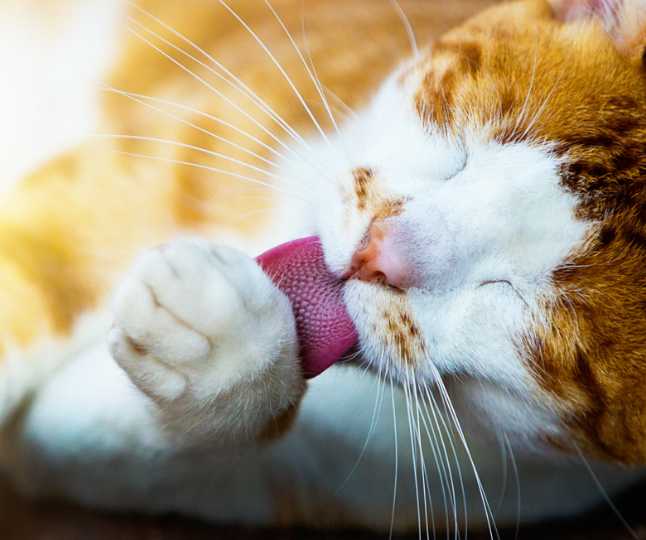
CatsCat BehaviorWhy Do Cats Groom Themselves After You Pet Them?BySarah Jeanne TerryDec 27, 2020 12:02 pm ESTThough cat behavior will always be a bit of a mystery to humans, their many contradictions will always keep people on their toes. When you're having a cozy day petting your kitty, you might be confused when after you stop petting, your cat starts grooming themselves. Even though it seems like you were sort of doing something like grooming, cats lick and groom themselves afterwards. Cat grooming is something you've probably seen your cat do plenty of times, but why do they groom themselves after you've already been petting them? As usual with cats, there are many possible explanations.Your cat may be grooming just to groomRapidEye/iStock/GettyImages #pdf854a8834c670d941cadf57b3ca0f37, #pdf854a8834c670d941cadf57b3ca0f37 img { aspect-ratio: 2505/2096; height: auto; }Your cat may be grooming just to groomThe simplest answer to your cat grooming after you pet them is that they just want to. Cats clean and groom themselves a lot. According to VCA Hospitals, cats spend as much as 30% to 50% of their time doing some kind of grooming behavior.More Like ThisCatsWhy Does My Cat Bite Me When I Stop Petting Her?CatsWhy Does My Cat Lick Me When I Pet Her?CatsWhy Is Regular Cat Grooming Important?Whether it's licking their front paws, their back or the rest of their body, cats are actually designed for grooming. Their tongues are covered in thousands of tiny spines, called pappillae. These tiny spines are perfectly designed to comb through their fine hair. Grooming also helps cats to remove anything like parasites or other outside elements from their fur, and it distributes their natural oils throughout their coat and skin to keep their coat healthy. So even though your petting session may be really cozy, it may be interrupting your cat's regularly scheduled grooming.Your cat may be doing mutual grooming with youmegatronservizi/iStock/GettyImages #p0f021ae431102fa184bf305f1b08fd51, #p0f021ae431102fa184bf305f1b08fd51 img { aspect-ratio: 4605/6899; height: auto; }Your cat may be doing mutual grooming with youAnother possible explanation for your cat's behavior is that your kitty might be trying to join in on the grooming party. Cats learn to groom themselves from an early age, usually taught by their mother. Their mama cat grooms them and teaches her kittens to groom each other as well, which is known as mutual grooming. There's a lot of evidence that cats see humans as a big cat, like a mother or sibling figure. So when they start grooming themselves after you've been petting them, your cat may be trying to recreate that kind of bonding. They're showing you that they care and that they think of you as a part of their kitty family.Cats may not like petting as much as you thinkNatasa Ivancev/iStock/GettyImages #p905b9fbd647d87fbcd39b30415b8cddc, #p905b9fbd647d87fbcd39b30415b8cddc img { aspect-ratio: 4592/2584; height: auto; }Cats may not like petting as much as you thinkWhen you pet your cat, it usually feels good. It might even feel calming and sweet. It's a great time to bond with your beloved feline. However, sometimes cats don't like too much petting. According to the VCA Hospitals, the sensation of petting can cause some cats to feel overstimulated. Some cats might react by trying to bite or running away. Another way your cat might react is by grooming. If they're grooming, then you'll probably stop petting. So if you notice when you pet your cat, if they react as if they don't like someone touching that area and then start to groom it, you may want to give them a little break.There might be a health problemkrblokhin/iStock/GettyImages #p86b35b66e7a602e490591134acf0c493, #p86b35b66e7a602e490591134acf0c493 img { aspect-ratio: 5500/3667; height: auto; }There might be a health problemAlthough much of the time your cat's grooming behavior is perfectly normal, sometimes, it's a sign of a health problem that you may need to address. One of those problems is Psychogenic Alopecia. According to Cat Health, this condition is hair loss caused by emotional or psychological over grooming behavior. If you've noticed that not only does your cat groom themselves when you're petting them, but all the rest of the day. Or if you notice hair loss or other symptoms, it may be time to take your kitty to the vet.A related condition is Hypersthesia, where your cat might have increasingly sensitive skin caused by emotional or psychological trouble. If your cat starts to get twitchy, has rippling skin across their back or other strange behaviors, then your kitty may need attention from a vet or behaviorist. A professional can help decrease stress in your cat's life that is at the root of their strange behavior.sjallenphotography/iStock/GettyImages #eb5639513ed725a080efe2593faa7f1bc, #eb5639513ed725a080efe2593faa7f1bc img { display: block; aspect-ratio: 1.2502762430939In conclusionIn conclusionFor the most part, your cat grooming themselves right after you finish petting them is perfectly normal. They may just being performing their regular grooming rituals or bonding with you. But if their grooming comes with other strange or aggressive behaviors, then they might be stressed or overstimulated. So as with any unusual or changes in behavior, talk to a professional to make sure your cat is happy and healthy.ReferencesCat Behavior Problems – Compulsive Disorders in CatsHyperesthesia in CatsCat Behavior Problems – Aggression – Petting AggressionPsychogenic Alopecia in Cats
 Cat Behavior
How To Get A Female Cat To Stop Spraying
CatsCat BehaviorHow To Get A Female Cat To Stop SprayingByKatherine MaloneUpdated Aug 30, 2021undefined undefined/iStock/GettyImages #p0b22360bdb8a12b102897b8331403604, #p0b22360bdb8a12b102897b8331403604 img { aspect-ratio: 4866/3468; height: auto; }Spraying is usually something that is associated with male cats as a way for them to mark their territory. Although it is less common, a female cat will also spray. Fortunately, their urine does not have the strong smell that a male cat's urine does, but this behavior is still destructive and undesirable. Evaluate your cat's behavior to determine the probable cause of spraying and take steps to stop the behavior.Never hit your cat or throw things at her if you catch her spraying. It's a natural behavior that she should not be punished for, and she won't understand the punishment. Don't rub her nose in the urine either. These methods are not effective and will likely increase her anxiety.Understanding why cats sprayUnderstanding why cats sprayWhen a cat sprays, she is depositing a small amount of urine on the surface to mark the area as hers. If you have multiple cats in the household, she may be spraying to claim ownership of the house.It is also a way for her to attract mates. Spraying is more likely in cats that haven't been spayed, although the behavior may continue in a small percentage of spayed cats.Stress is another trigger that may make your cat start spraying. Stress may be caused by a new pet or child in the household, moving to a new home, or unusual activity in the house such as when you have guests or go out of town.Get a veterinary examinationGet a veterinary examinationIf your cat has long been well behaved and suddenly starts spraying, the first thing to do is take her in to see a veterinarian. This can rule out a physical or medical cause for the behavior such as an infection.Vasyl Dolmatov/iStock/GettyImages #e6b30f560f88aead5f9bd6f1afac974c1, #e6b30f560f88aead5f9bd6f1afac974c1 img { display: block; aspect-ratio: 1.4983713355049If your cat has not already been spayed, make an appointment to have this done right away. Cats who have not been fixed may be spraying to attract male cats that may be roaming in the area. In many cases, spaying may resolve the behavior and it has additional health benefits including eliminating the risk of uterine and ovarian cancer and decreasing the risk of breast cancer. Once your cat is spayed and given a clean bill of health, you can address spraying as a behavioral issue.Check the litter boxCheck the litter boxMaking sure the litter boxes are clean and that there are enough of them can often help the problem, especially if you have multiple cats in your home. Make sure that for however many cats you have, you have the same number of litter boxes plus one. So a two-cat household could have at least three litter boxes. This can help reduce the risk of conflict and fighting between cats that can lead to spraying.Change out the litter at least once a week and scoop the box daily to keep it clean. Make sure to place the litter boxes in locations where your cat feels comfortable so that she doesn't deliberately avoid using them.Change the environmentChange the environmentIf the spraying is caused by a conflict with other cats, make additional modifications to your home. Make sure there are plenty of perches so that each cat has a safe place to rest. You can also have multiple areas where the cats can eat and drink water. If the problem is cats outdoors, consider closing the blinds so that your cat won't notice them.Clean up all of the areas where your cat has sprayed so that the scent of her urine doesn't draw her back. Use an enzymatic cleaner specifically designed for use on pet odors and urine to fully eliminate the scent.Catherine Falls Commercial/Moment/GettyImages #eb53a17f5625593d2e173b8ba1df80b42, #eb53a17f5625593d2e173b8ba1df80b42 img { display: block; aspect-ratio: 1.5947459918872Other products and medicationsOther products and medicationsIf these basic steps aren't working to stop your cat from marking, consider a product such as Feliway cat spray. This is a product that has the scent of the glands in a cat's cheek, which is different from the pheromone found in cat urine. Many cats may avoid urine spraying in areas that have the scent of the cheek pheromone.Cats that spray due to anxiety or depression may benefit from medications. Putting your cat on an anti-anxiety medication such as benzodiazepines or an antidepressant such as fluoxetine may an effective way to stop the negative behavior.ReferencesVCA Hospitals: Spaying in CatsVCA Hospitals: Cat Behavior Problems – Marking and Spraying BehaviorASPCA: Urine Marking in Cats
 Cat Behavior
Why Does My Cat Lick Me When I Pet Her?
CatsCat BehaviorWhy Does My Cat Lick Me When I Pet Her?BySarah Jeanne TerryOct 31, 2019 4:07 pm ESTOn a lazy Saturday afternoon, you probably love nothing more than a good snuggle with your kitty. When your cat snuggles in your lap, there's no better sensation than stroking that soft fur and hearing your cat happily purr. However, purring isn't the only way that our cats respond to petting. Some cats lick us. It doesn't matter what position they're in or where they are being pet, without fail, our cats have to find a way to lick their humans in response to being pet. And why is that? We dug into the body language and science behind our cats' tendency to lick us when we pet them to understand a little of their behavior.What exactly does it mean when my cat licks me?Volanthevist/Moment/GettyImages #p38329d81b34e4b103c711d8e57ecc4fe, #p38329d81b34e4b103c711d8e57ecc4fe img { aspect-ratio: 6016/4016; height: auto; }What exactly does it mean when my cat licks me?More Like ThisCatsWhy Do Cats Like Being Pet on Their Heads?CatsWhy Do Cats Groom Themselves After You Pet Them?CatsWhy Do Some Cats Lick When You Scratch Their Backs?First of all, it's important to know that cats lick for more reasons than we humans might imagine. We tend to usually just classify licks as "kisses," and, while kitty licks are a sign of affection, they also represent much more than that. Cats don't just lick you to say, "I love you," but also to claim you as their own. Their saliva contains pheromones that leave a scent trail that suggests to other animals that you are taken. They also lick as an important part of social bonding and grooming habits. Cats often socialize by grooming one another, and they want to socialize with their humans too.What does petting mean to your cat?Konstantin Aksenov/iStock/GettyImages #p19734ddde8540e46d66fbef6e5230df9, #p19734ddde8540e46d66fbef6e5230df9 img { aspect-ratio: 5472/3648; height: auto; }What does petting mean to your cat?Because cats are our pets, we naturally assume that they love being pet. However, the truth, as everything with cats, is a little more complicated. A study in the Applied Animal Behavior Science journal analyzed where and how cats like to be pet, because there wasn't a lot of scientific evidence about cats and physical touch.For the study, scientists filmed cats' reactions to being petted in different areas, as well as their reactions to their own humans versus strangers. The study showed that cats prefer to be pet in the areas where they might practice social grooming – their cheeks, their ears, between their eyes and their chins. So for your kitty, it's safe to assume that when you pet them, they're experiencing similar social cues and bonding that they experience when they socially groom with other felines.Your cat may lick you when you pet her because she thinks you're socially grooming each other.Viola Tavazzani Photography/Moment/GettyImages #p6c6697fb08bedc748a882a47a8772703, #p6c6697fb08bedc748a882a47a8772703 img { aspect-ratio: 4256/2832; height: auto; }Your cat may lick you when you pet her because she thinks you're socially grooming each other.When your cat licks you while you pet her, one of the most common reasons is that she's trying to socially groom. As in the study above, cats love to be pet in certain areas, because those areas are likely associated with their instincts to create social bonds by grooming one another. Though you're not a cat, your cat may feel like you're improving and building on your social bonds when you pet her. And perhaps she wants to return the favor.But cats don't groom one another with their paws, they use their tongues. In fact, that's what a cat's tongue is made for. When you feel her reach out and graze you with her sandpaper-like tongue and wonder why it feels like that, the answer is for grooming. According to assistant curator of great cats at the National Zoo, Leigh Pitsko, "Their tongue is actually like sandpaper. They have tiny hooks called papillae. When they glide across the fur, it acts like a comb." She explains that these hooks help to detangle fur, so they work perfectly for cats' fur, even if they feel a bit rough on human skin.Unless your hands and arms are incredibly hairy, your kitty probably isn't doing much to keep you well groomed. However, she is doing you another service. She is attempting to reaffirm and strengthen your social bond as she would with one of her own kind. When another cat licks her as part of social grooming, she would lick back. She's trying to pay you back for the favor of petting her by offering you a little grooming in return.She wants your pets only for herself.vladans/iStock/GettyImages #ea0477fd40970f66c6b2044e86c3ca965, #ea0477fd40970f66c6b2044e86c3ca965 img { display: block; aspect-ratio: 1.5A cat's licks and affection may not only be a generous way to show their humans they care. They may also be marking their territory and signaling to other animals that you're their property. While we often think of a pet marking its territory through peeing, cats can also leave behind pheromones in their saliva. This scent marks you and shows how much your cat wants to connect with you.Cats are big on family, and they like to mingle their scents with the smells of their family members to create a unified, family scent. This helps them to build their family group and feel comfortable. When your kitty licks you, she's inviting you into her family and creating a family scent.So, to answer your question, the licking is perfectly normal.Faba-Photograhpy/Moment/GettyImages #e01e2b8b3b2119ebf8fed14c12de306d7, #e01e2b8b3b2119ebf8fed14c12de306d7 img { display: block; aspect-ratio: 1.3325109649123Overall, your cat's tendency to lick you whenever you pet her is a positive sign. She is most likely licking you to grow closer and form tighter bonds. So you can feel good each time you feel that rough little sandpaper tongue that you and your kitty are becoming closer and happier and snugglier together.
 Cat Behavior
Why Do Cats Like Sleeping On Warm Things?
CatsCat BehaviorWhy Do Cats Like Sleeping On Warm Things?ByKayleigh RobertsJan 29, 2019 1:07 pm ESTMake a mental list of "things cats love." Got it? Is "curling up in a fluffy ball and napping on anything remotely warm" on the list? If it's not, you clearly don't know a ton about cats—but that's okay! We're all learning new things every day! Even if it made the list, however, there's a decent chance you don't actually knowwhycats are so prone to catching z's on any warm surface they can find. Here's a primer on this most common of cat behaviors.Blackzheep/iStock/GettyImages #e037fa349c8704c7aaebef7887a154cae, #e037fa349c8704c7aaebef7887a154cae img { display: block; aspect-ratio: 1.5What is a cat's normal body temperature?What is a cat's normal body temperature?Fun fact: The warm thing your cat is sleeping on might actually feel kind of cool to her.More Like ThisCatsWhat Does it Mean When Your Cat's Ears Are Cold?CatsWhy Do Cats Like to Sleep on Top of You?CatsDoes Your Cat Need a Sweater in Cold Weather?Cats' normal body temperature range is 100.5 to 102.5 degrees, with 101.5 degrees often cited as a definitive "normal" body temperature (the same way 98.6 degrees has become the official "normal" human temperature). With a higher natural body temperature comes a higher tolerance to heat, which is why Fluffy can nap, perfectly content, on your radiator when you've set the temperature to be in the 70s.Do cats seek out warm places more than dogs do?Batalina/iStock/GettyImages #p6a817a2d2ed2d2addf13dc30b7f78164, #p6a817a2d2ed2d2addf13dc30b7f78164 img { aspect-ratio: 4032/1960; height: auto; }Do cats seek out warm places more than dogs do?While many dogs love a good sunbathing session, cats do seek out warm places more than their canine cousins. Like cats, dogs have a higher natural body temperature than humans (theirs is typically in the 101-102 degree range), so they tend to prefer hotter temperatures than we relatively-hairless humans do. Dogs aren't as good at keeping themselves cool and regulating their own body temperature as cats are, however, which is probably why they're less prone to seeking out makeshift heating pads to doze on.Does a cat's fur keep them sufficiently warm?sdominick/iStock/GettyImages #pb12b82e126c2343684ff3b4d33e0498a, #pb12b82e126c2343684ff3b4d33e0498a img { aspect-ratio: 5616/3744; height: auto; }Does a cat's fur keep them sufficiently warm?You might assume that your cat's soft, luscious fur coat mostly functions as a built-in heating system, but that's not totally true. While a cat's fur does help keep them warm in the winter, it also helps keep them cool during times of extreme heat. The fluffiness of the fur creates a little bubble of air around the cat, which protects its skin from the elements, be they hot or cold.Should you ever worry about your cat sleeping on warm things?Should you ever worry about your cat sleeping on warm things?Even though your cat loves to nuzzle up to warm stuff, there can be too much of a good thing. And remember how your kitten's fur coat can help keep her cool in addition to keeping her warm? Well, that can be the source of some trouble when it comes to heat-based napping.Speaking to the Mother Nature Network, cat expert Pamela Merritt explained that "while [cats'] fur is insulating, this can work against them when they use our heat devices. They can cuddle up to something warm, not realize it is getting warmer, and their fur will keep them from noticing until it is quite hot."Anthony Bradshaw/Photographer's Choice/GettyImages #e7eee98b360cbedb5ba5d6f4b49316de2, #e7eee98b360cbedb5ba5d6f4b49316de2 img { display: block; aspect-ratio: 1.1875159887439Short answer: Youshouldkeep an eye on your cat and not let her sleep on something outrageously hot. But, like, duh, right?Are cats ever uncomfortable when they sleep?Are cats ever uncomfortable when they sleep?Based on the range of bizarre positions they sleep in, it probably seems like cats are incapable of discomfort, as long as they're unconscious. In a way, this is kind of true—catscansleep comfortably just about anywhere. This is probably due to their kind-of-sort-of liquid state (seriously—there's science to back up the idea that cats do, at times at least, qualify as liquids).MarynaVoronova/iStock/GettyImages #e03a7cb088bc1bbdeedb37a9f940a2318, #e03a7cb088bc1bbdeedb37a9f940a2318 img { display: block; aspect-ratio: 1.5057142857143So, you can at least take comfort in knowing that if your cat is snoozing somewhere, be it warm or cool, she's comfy and you don't need to worry (unless you need your laptop, of course).